Frequently asked
Questions I'm often asked
As an equine bodyworker, I get a lot of great questions. Here are the ones that come up most. Can't find yours? Ask me.
About bodywork
What is equine bodywork?
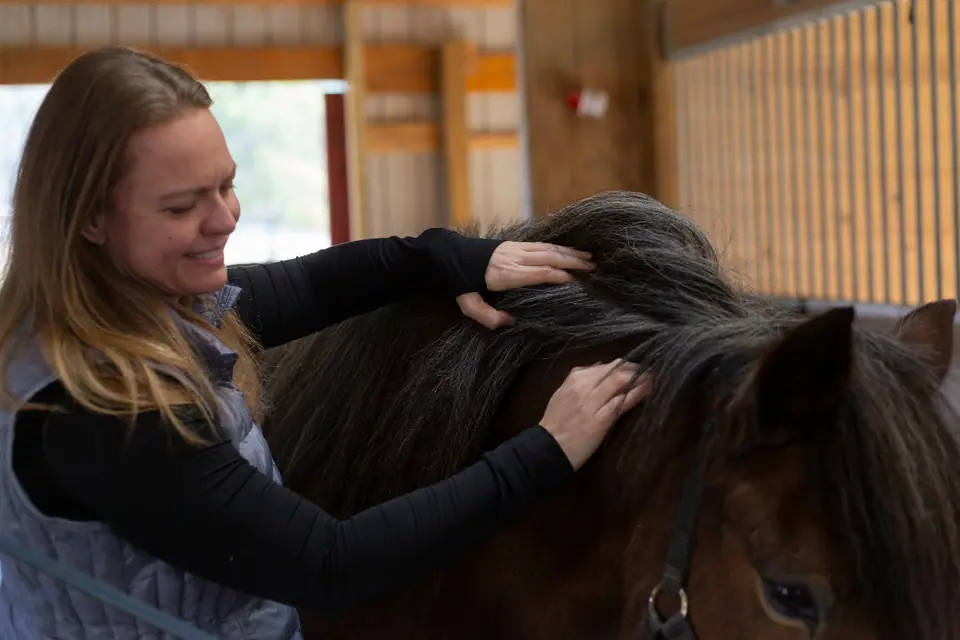
It's hands-on work that helps your horse feel and move their best: soft-tissue massage, myofascial release, stretching, and exercises that build strength and balance. For a horse in regular work or competing, it's part of staying in top form: tension release, relief from muscle soreness, better range of motion and support for recovery between rides and shows. The real value is in releasing tight, overworked muscles so small issues are less likely to turn into big ones. I think of it as prehab. It isn't about waiting until something breaks.
How do I know if my horse could use bodywork?
Horses are masters of compensation, so the signs can be subtle. Things owners often notice:
- Under saddle: stiffness on one side, wrong leads, trouble with lead changes, resisting collection, refusing jumps, a hollow back or high head, bucking.
- On the ground: pinned ears or biting when tacking up, flinching when groomed, fidgeting in the crossties, not standing well for the farrier.
- In movement and body: short or choppy strides, tripping, dragging toes, uneven muscling.
Any of these is worth a chat with your vet first, to rule out a medical cause.
Does bodywork replace my vet?
No, and it never should. I work alongside your vet and farrier as part of your horse's team. I don't diagnose conditions or prescribe anything. With your OK, I'm always happy to share my session notes with your vet. One of the most helpful things you can do for your horse is build a team where everyone talks to each other.
Bodywork supports your horse's wellbeing alongside veterinary care. It is not a substitute for it. If your horse is lame, unwell or recovering from injury, please check with your vet first.
Can bodywork help my horse's performance?
Many of my clients ride daily and compete often, and they book bodywork so their horse can move and feel their best for the work they're asking of them. After a session, owners often notice a freer stride, a softer back, or a horse who's more willing to lift through the back and push into the contact.
Bodywork doesn't replace good training, saddle fit, hoof care or your vet. It works best as one part of that team, with regular sessions and homework between them.
Do you work with older horses or horses showing signs of arthritis?
Yes. I have a soft spot for horses showing signs of osteoarthritis, like my own horse, Artie. For these horses, I focus on supporting comfort and mobility with massage, PEMF and movement homework, always alongside your vet's plan. Please share anything your vet has told you on the intake form so I can plan around it.
What training do you have, and what kinds of massage do you use?
I'm a Certified Equine Massage Therapist (CEMT) through the Animal Rehab Institute, finishing with a 10-day live lab in Wellington, Florida, in December 2023. My bodywork started with a Masterson Method clinic, and I've since added more training, including Zenma Wellness techniques in 2025. In a session I mix:
- Sports massage (the Wilson-Meagher method) to release areas where tension tends to build.
- Myofascial release, a technique for the connective tissue that can help restore natural movement and range of motion.
- Swedish massage strokes to support circulation and relaxation.
I match my pressure to the horse in front of me and adjust as they tell me what they need.
Booking & visits
How do I book a session?
Send me a booking request through the form on my Book a Session page, or a message through my contact page. I'll reply personally to arrange a time by call or text.
There's no online calendar. I plan my days around the barns and areas I'm visiting, so it's easiest to find the right day together. New clients also fill out a short intake form before the first session.
What happens during a visit?
- History and goals: on a first visit, we go through your horse's history. On later visits, I catch up on what's changed. Then we talk about your goals.
- Assessment: I watch your horse standing and moving, and check how they respond to touch.
- Hands-on work: about 60 minutes of massage and myofascial release, plus PEMF if we've planned it.
- Homework: I show you stretches and exercises to do between visits.
- Session report: afterwards, you get a detailed report with my notes and what I'd suggest next.
Plan for about 90 minutes on a first visit. Follow-ups are usually a little shorter.
“She's also very thorough, and sends detailed notes about your horse after each session!”
How do I get my horse ready?
- Fill out the intake form at least 24 hours before your first visit.
- Pick a time that doesn't clash with feeding, turnout, riding, training or other appointments.
- Have your horse clean and dry. No fly spray or ointments, please!
- Make sure someone can jog your horse for me and hold them if needed.
- Want to ride that day? Ride right after the session, not before.
Are there times my horse shouldn't have bodywork?
Yes. Please check with your vet before booking if your horse has:
- abnormal vital signs or any sign of illness
- heat, swelling, hives or a skin condition anywhere on the body
- any lameness
- signs of colic, or very loose manure
- a sudden, extreme change in behaviour
- a pregnancy at certain stages Confirm with Jen: which stages
In any of these cases, your horse needs to be cleared by your vet first. If you're not sure, just ask!
What should I do after a session?
Your session report will have specific suggestions for your horse. In general:
- Hand walk or turn out for at least 10 minutes within two hours, to keep things moving.
- Make sure there's plenty of fresh water.
- Do the stretches and exercises in your report.
- Give your horse light work or a day off. Bodywork can be a lot to process!
How often should my horse have bodywork?
It depends on your horse's job and competition schedule. As a rough guide, horses in heavy work or competing often do well with a session every two weeks, and horses in lighter work about once a month. After your first visit I'll suggest a rhythm that fits your horse. Consistency matters more than anything: consistency leads to impact, and impact leads to results. Your homework between visits helps a lot too.
Should I book bodywork before or after a show?
Both can work well. Many riders like a session a few days before a show, so tension is released and your horse has time to settle before they compete. I don't recommend a first-ever session right before a big class, because bodywork can be a lot for a horse to process.
A session in the days after a show can support recovery and help with muscle soreness from hauling and competing. Once I know your horse and your show calendar, I'll suggest timing that fits around it.
Do I need to be at the barn?
Someone needs to be there to jog your horse during the assessment and hold them if needed. It doesn't have to be you. That said, I love it when owners can be there, because I'll explain what I'm seeing and show you the homework. If you can't make it, just arrange payment for the day of the session.
“Jennifer explains what she sees and what she's doing during the sessions as well and will give easy releases you can do at home!”
PEMF
What is PEMF, in plain English?
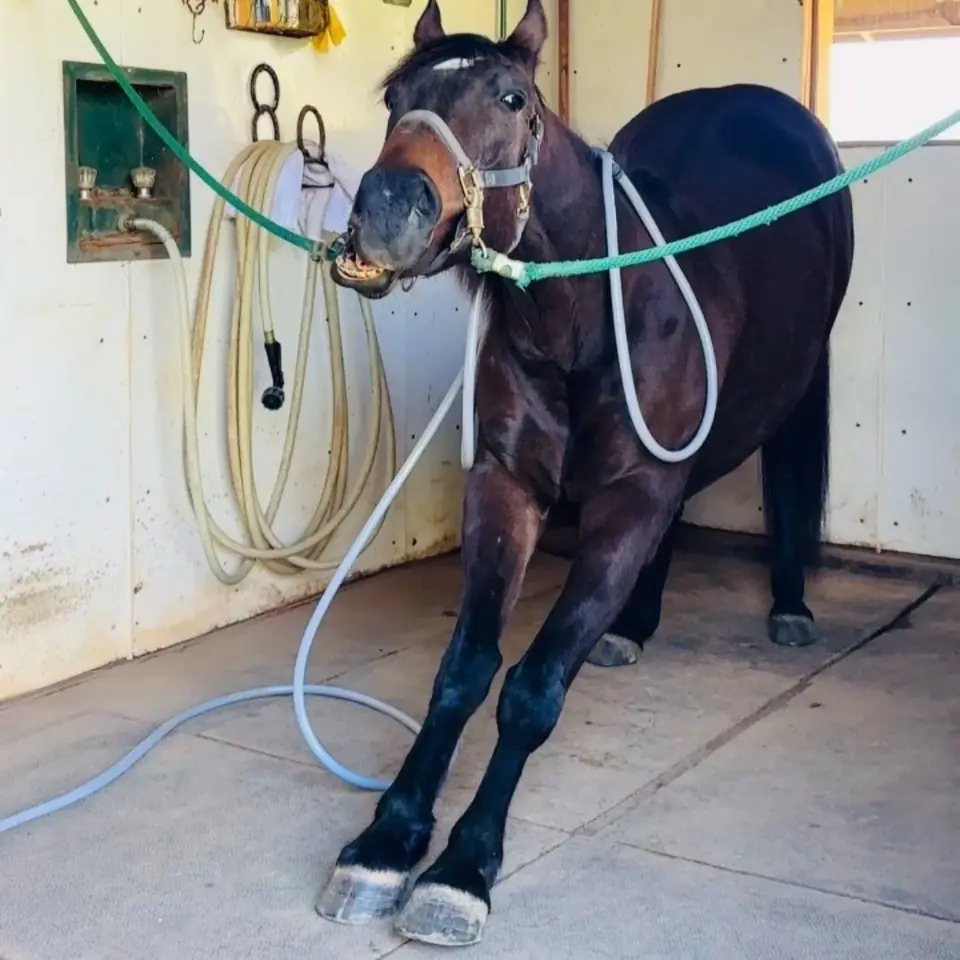
PEMF stands for pulsed electromagnetic field. A coil placed on or near your horse's body sends out a gentle pulse. It's used to support circulation and relaxation, and many owners notice their horse looks softer and more relaxed during and after a session. I use a Pulse EQ-X device, which is made right here in Northwest Georgia. PEMF can be its own session or added to a massage. Whole-body sessions run 60 minutes, and targeted sessions on one area, like a hock or stifle, run 30 to 45 minutes.
What should a PEMF session look like?
Here's what I tell my clients: PEMF should make your horse's muscles gently flutter, like butterfly wings. That's it. If the muscles are twitching, bouncing or jumping, the setting is too high. PEMF should look like butterfly flutters, not convulsions! Most horses get very relaxed: lots of licking, chewing, yawning and the occasional nap.
Is PEMF right for every horse?
Not always. I won't use PEMF if your horse:
- has an injury, or a possible injury, that hasn't been seen by a vet yet
- has colic or signs of colic
- is actively bleeding
- is pregnant Confirm with Jen
- has an implanted electronic device
If your horse is recovering from an injury, PEMF can be a nice addition to the plan your vet already has in place, once your vet has given the OK.
Travel & rates
Where do you travel?
I come to you. I see horses across Atlanta, Alpharetta, Chattanooga and Northwest Georgia, including Milton, Canton, Woodstock, Jasper, Dallas and Cartersville. I also travel throughout the Southeast when there are multiple horses to see, with a travel fee. I group visits by area, so I'm in each zone on set days.
What do you charge?
- Combo session (massage + PEMF): $150
- Massage only: $100
- Whole-body PEMF (60 minutes): $85
- Targeted PEMF (30 to 45 minutes): $65
Prices are per horse. I also offer trainer discounts, multiple-horse discounts and rebook discounts, so ask me which ones fit you.
A travel fee may apply in certain circumstances, and I'll let you know before we book. Barnmates booking the same day helps keep it down for everyone.
How do I pay, and what if I need to cancel?
Payment is due at each session, and there are no deposits. I accept credit card (3% transaction fee), Venmo (3% transaction fee), cash or Zelle, and you can save a card on file for future sessions.
Need to cancel or reschedule? Life happens, and I never charge a cancellation fee. I just ask for as much notice as you can give. If last-minute cancellations become a pattern, I may ask for payment when you book future sessions.
For bodyworkers
Do you sell an online certification course?
No. I believe you can't learn a hands-on skill through a computer screen, so I'd always point you to a program with real, supervised time with horses. What I do offer is practical help from someone a few steps ahead: my Ultimate Guide to Equine Bodywork Certification, session note templates, and a free guide, Five Essential Questions for Aspiring Bodyworkers.
Can I use your templates with my own clients?
Yes, that's what they're for! Print the session note templates for your own client visits. Please don't resell them or share the files with other practitioners. Want your own branding on a template, or different fields? Message me and let's talk.
Book a Session
Let's help your horse truly flourish.
Send me a booking request with a little about your horse and your goals. I'll get back to you personally to set up your session.
Or email me at info@flourishequinebodywork.com