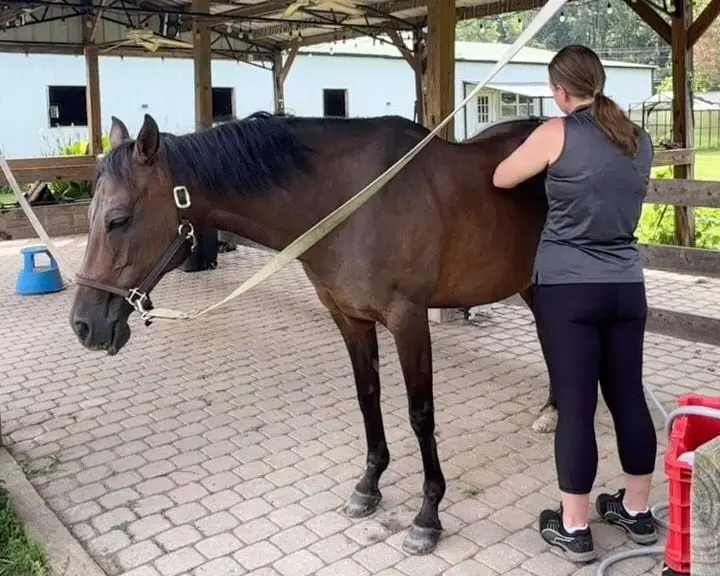
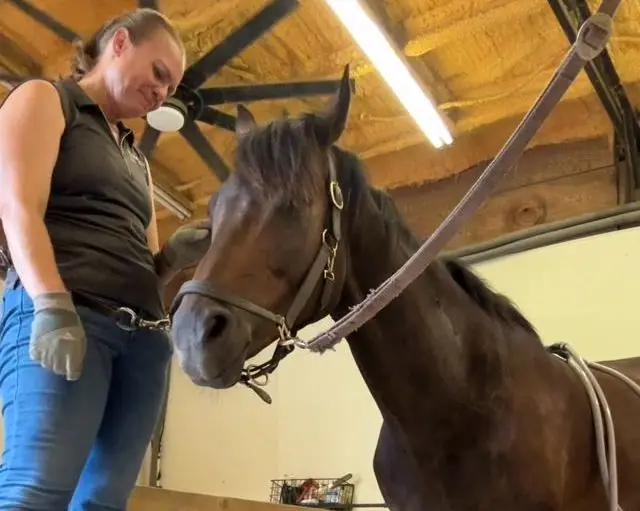
Sports massage, myofascial release and PEMF for horses in regular work: tension release, relief from muscle soreness, better range of motion and support for recovery between rides and shows. Competing every weekend or enjoying retirement, all horses are welcome.
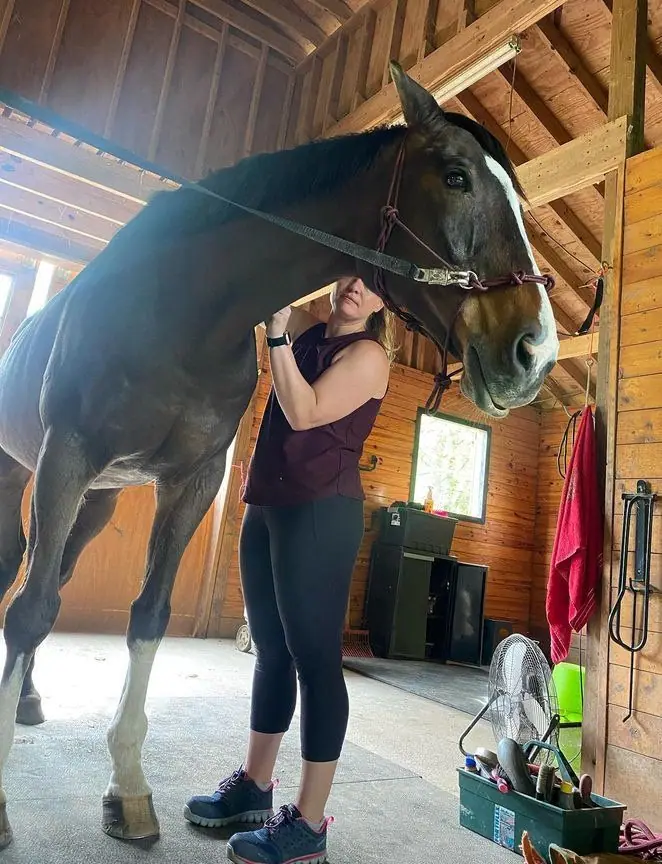
Training hard, hauling to shows and competing leave tight, tired muscles behind. My hands-on work focuses on tension release and relief from muscle soreness, so your horse can move freely, use their body well and keep performing.
I blend a few methods in every session, depending on what your horse needs:
Equine sports massage
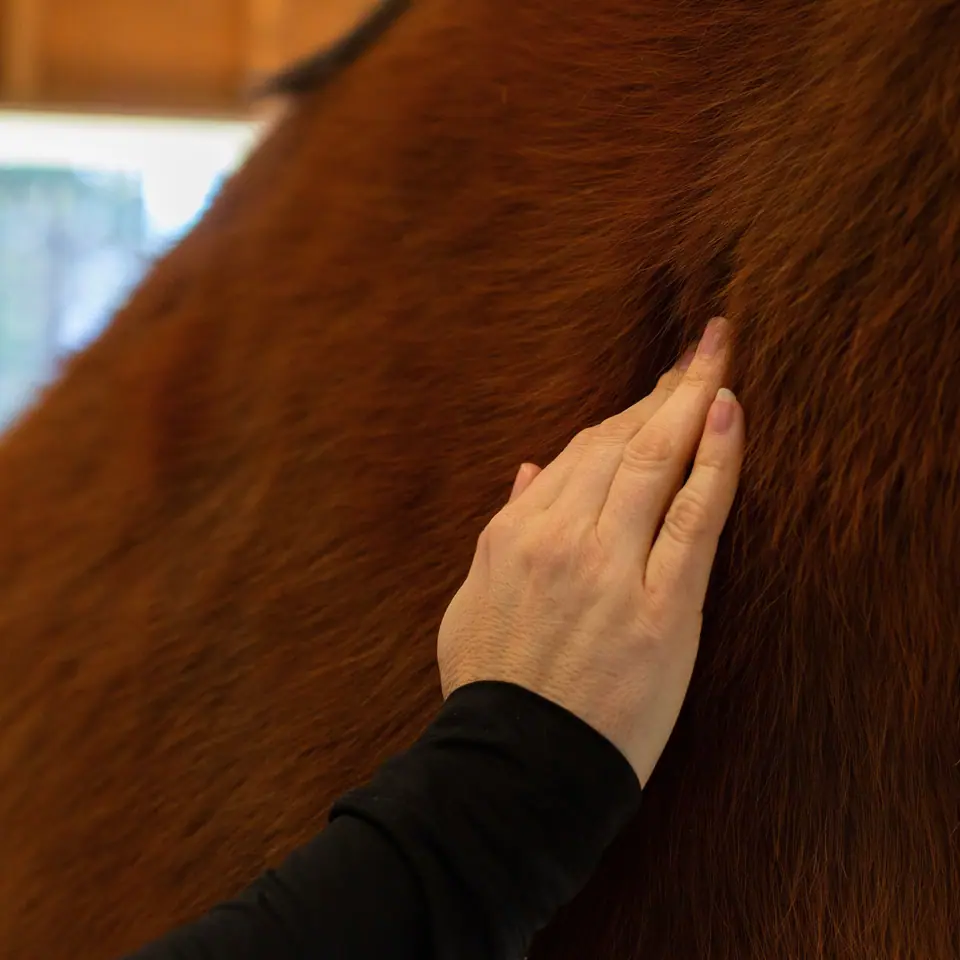
Based on the Wilson-Meagher method: 25 points on the body where tension and restriction often build up in hard-working horses, worked with direct pressure, cross friction and compression.
Myofascial release
A technique that helps lengthen shortened connective tissue (fascia) and unwind holding patterns, to support range of motion.
Swedish massage
Long, rhythmic strokes that support circulation and recovery.
How it feels to your horse
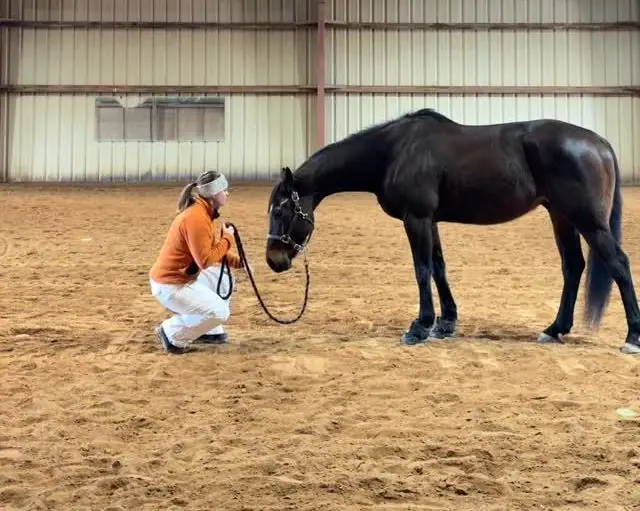
Horses tell you when it's working: a lick and chew, a yawn, a big sigh, a head that drops.
They also tell you when it's not. I welcome the fidgety moments too. They're just clues pointing to where the hidden tension lives.
Older horses and signs of osteoarthritis
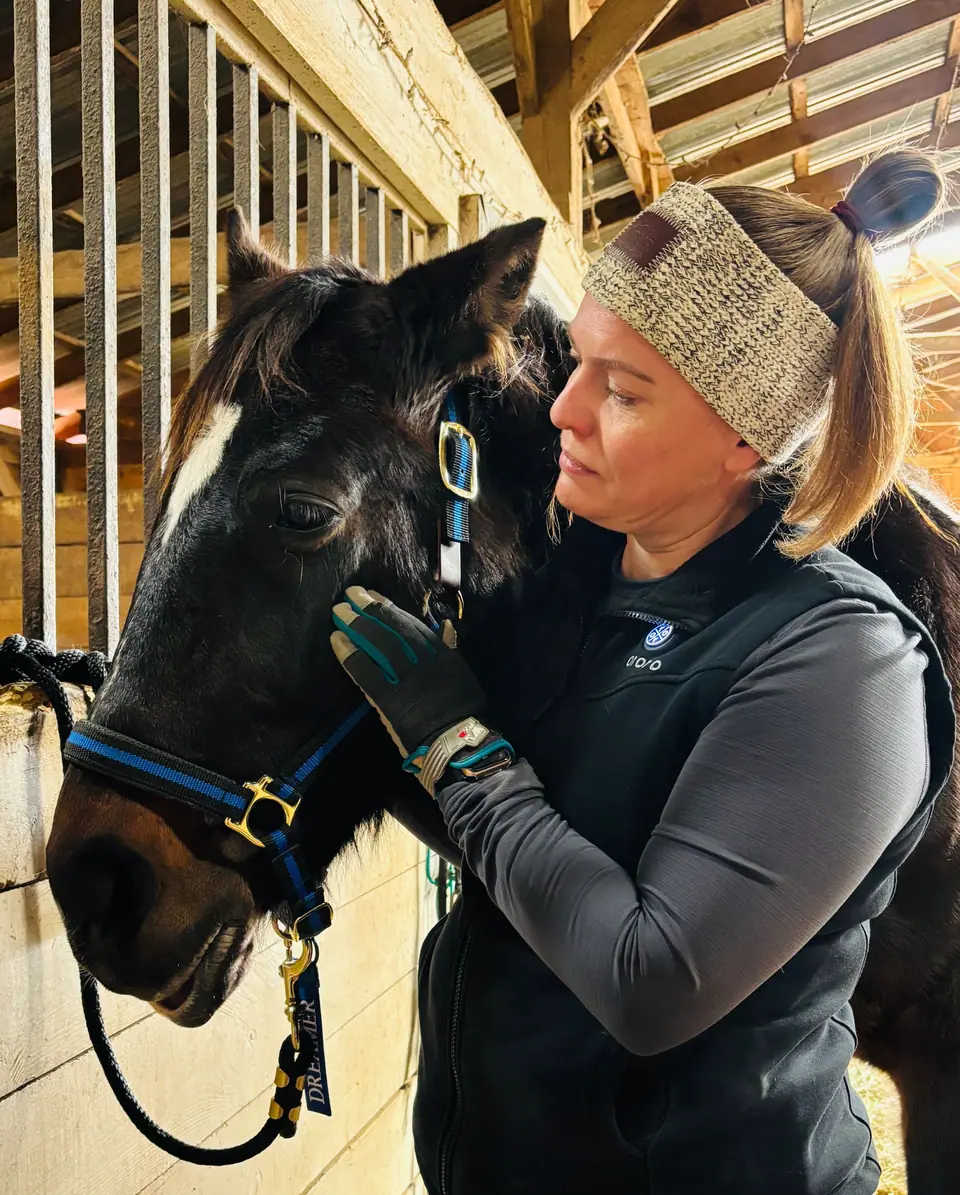
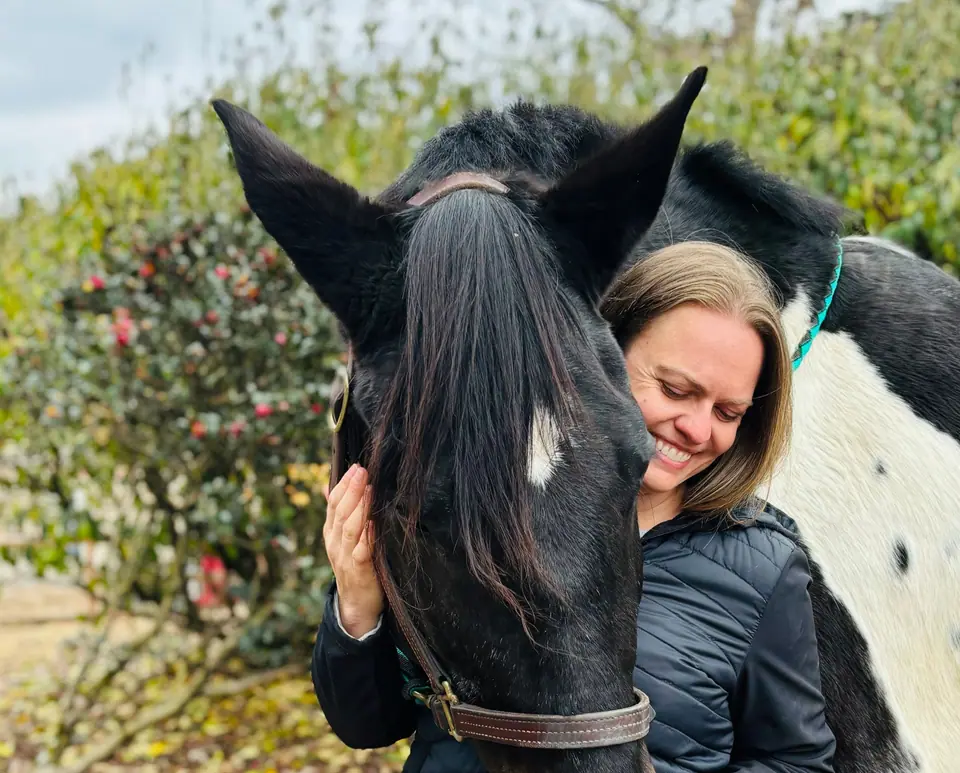
I have a soft spot for horses showing signs of osteoarthritis, like my own horse, Artie. For them, I focus on supporting comfort and mobility, always alongside your vet's plan.
How long: About 60 minutes of hands-on work after an assessment. First sessions run longer while I get to know your horse.
"PEMF should look like butterfly flutters. Not convulsions!"
Jenny
02Pulsed electromagnetic field
PEMF (Pulse)
What it is, in plain words
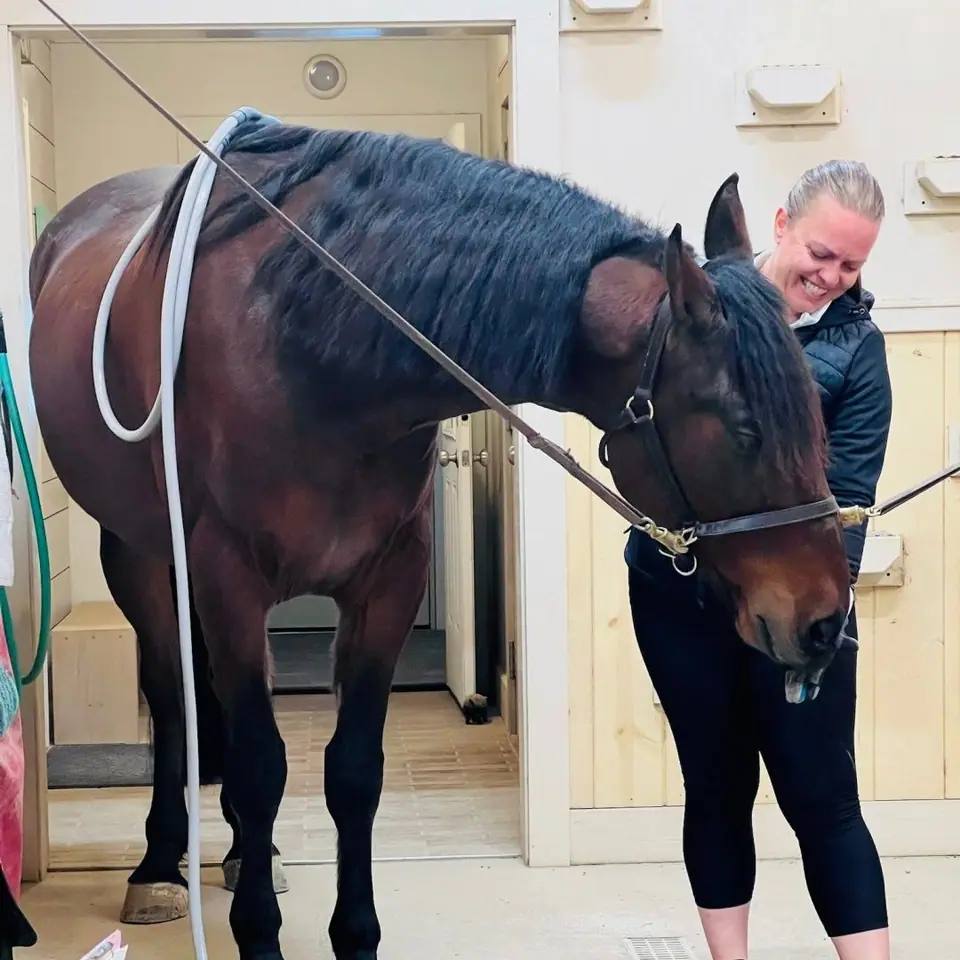
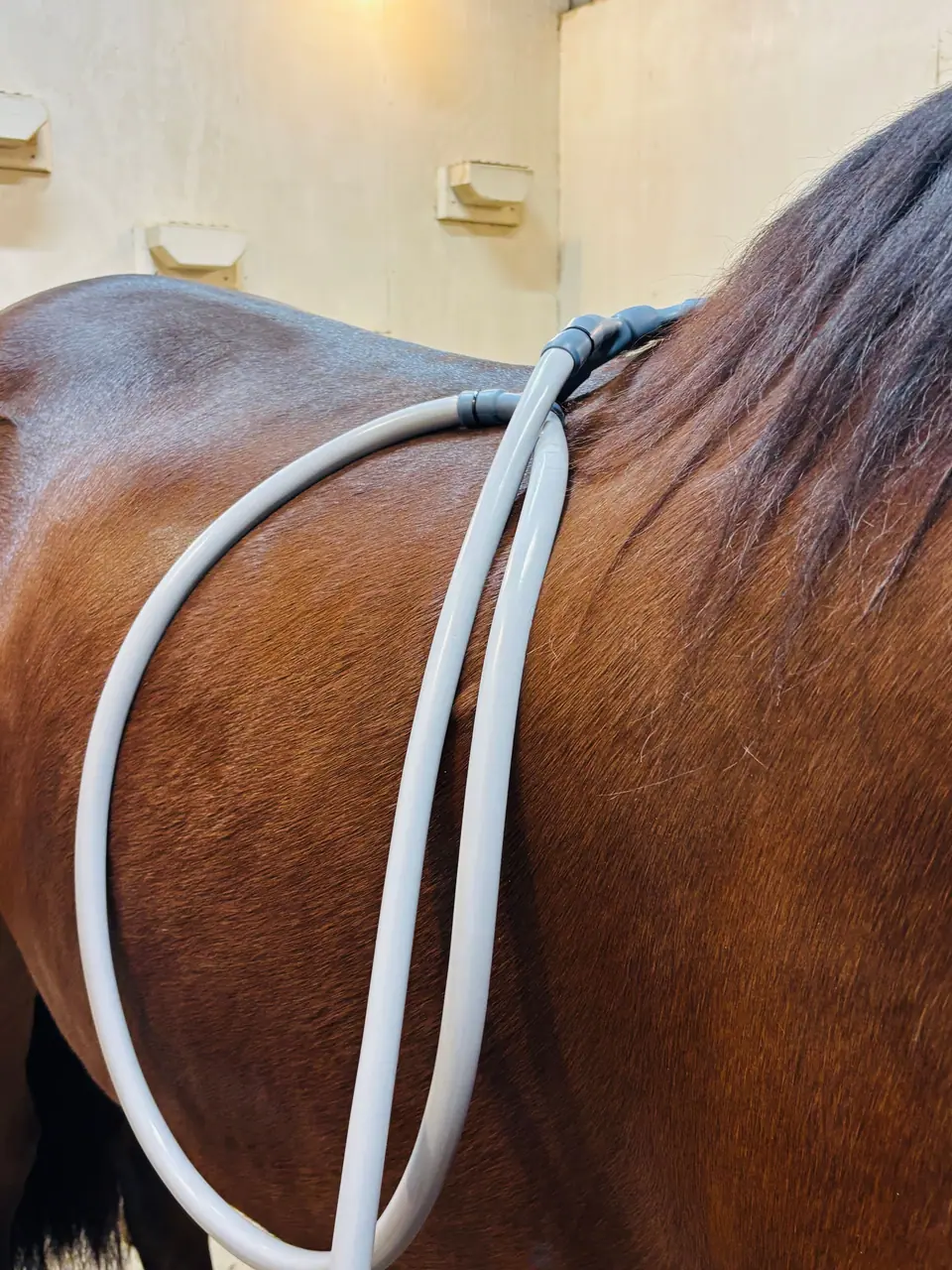
PEMF stands for pulsed electromagnetic field. I rest a soft coil or loop on or around your horse, and the device sends a gentle pulse through it. Many owners know it as "Magnawave", which is one brand. I use a Pulse EQ-X, made right here in Northwest Georgia.
PEMF may help support circulation, muscle relaxation and recovery, and many riders use it as part of their horse's routine around training and competing. It pairs well with massage, and it's a nice option for horses who are touchy about hands-on work.
What a session looks like
Your horse stands quietly, usually in the cross-ties or a wash stall, while I move the loop over the areas we've planned.
Whole body
60 minutes over the whole horse, on its own or alongside massage.
Targeted
30 to 45 minutes focused on one area, such as the hocks, stifles or back.
How long: Whole-body sessions run 60 minutes. Targeted sessions run 30 to 45 minutes.
Butterfly flutters, not convulsions
Here's what I tell my clients. PEMF should cause your horse's muscles to gently flutter like a butterfly's wings. That's it. If you ever see muscles twitching, bouncing or convulsing, the setting is too high. Lots of horses get sleepy: soft eyes, lip licks, a lowered head.
PEMF isn't the right choice if your horse:
is in foal (please tell me if your mare might be)
is actively bleeding
has an injury that hasn't been looked at by your vet yet
Artie says carrot stretches are the best part of his day.
03Movement & homework
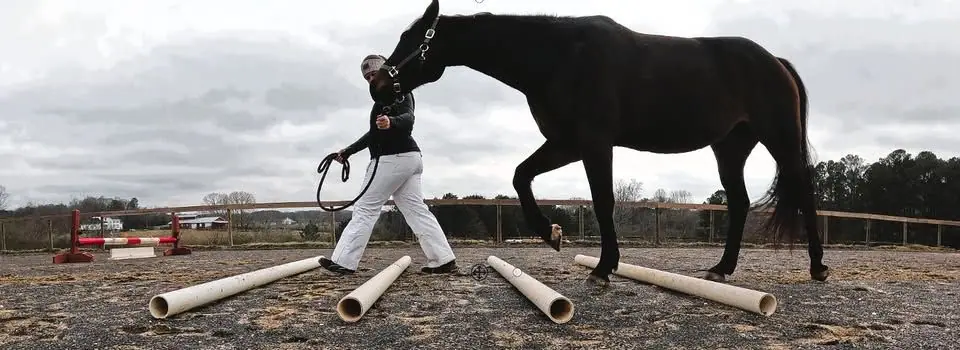
Stretching, range of motion & in‑hand polework
Bodywork goes further when the work doesn't stop the day I leave. Consistency leads to impact, and impact leads to results.
So every horse gets homework. It might be carrot stretches, belly lifts to switch on the core, limb stretches, or simply teaching your horse to stand in a relaxed, neutral posture. I show you each one at the barn and it's written up in your session report, with photos where they help.
Stretching should never be a wrestling match. A good stretch looks like a deep sigh, soft eyes and a horse who leans into it. If your horse braces, snatches the leg back or holds their breath, ease off.
In-hand polework
In-hand polework is one of my favorite ways to build mobility, a healthy topline, body awareness and coordination, without riding. I'm not running my seasonal in-hand polework program this winter, but polework is still part of how I support my clients. I'll talk you through it, show you how to set it up, and model it with your horse if you'd like. I also teach polework clinics, so ask me when the next one is.
In all honesty, I WANT the horses I work on to communicate with me. Every yawn, lean, lick and stomp tells me something about where your horse is holding tension, so I listen and adjust as we go.
"She is very attentive to the horse's body language during the massage and respects what they are communicating."
Nicole, with Dougal Google review
Artie
01
Licking and chewing
Often a sign that something just let go, so I'll usually pause and let your horse process it. Artie works through his tension slowly, with every lick and chew and head shake.
Artie
02
Yawning
Big yawns, sometimes so big the jaw goes sideways, usually come after a release. Some horses yawn over and over. Some take a long time to trust you with one: Artie made me wait a year and a half.
03
Head drop and soft eyes
A lowered head, heavy eyelids and a soft eye usually mean your horse is relaxing and feels safe with me. It's also what I'm looking for when I teach a horse to find a relaxed, neutral posture.
04
Leaning in
When a horse leans into my hand or into a stretch, they're usually saying "yes, right there." Leaning away, or shifting their weight to dodge, tells me to go softer or try another way.
05
Stepping away or stomping
This isn't bad manners. It's a horse saying "that spot is sensitive" or "not yet." I once had a mare stomp her opposite hind leg at me mid-session. No hard feelings: we carried on when she was ready and had a lovely, relaxing session.
06
Tail swishing and fidgeting
A swishing tail or a fidgety horse can be a clue pointing straight to where the hidden tension lives. I welcome it, because it helps me do a better job. (Fidgeting can also just mean bored. Context matters!)
[CONFIRM WITH JEN: OK to show the client horses in cards 04 to 06]
Some horses just don't give big responses, and that's okay. If you listen close enough, they will talk to you.
If a horse reacts strongly, safety comes first for both of us, and big changes in behavior are always worth a call to your vet.
Every visit follows the same rhythm, from the form you fill in beforehand to the report that lands in your inbox afterwards.
01
Before
Fill in the intake form at least 24 hours before your first visit. It helps me review your horse's history and come prepared. (It's part of booking on this site.)
Pick a time that works for your horse, away from feeding, turnout, riding, training or other professional appointments.
Make sure your horse is clean and dry. No fly spray or ointments, please.
Have someone there to jog your horse for the assessment and hold them during the session if needed.
Riding that day? Plan to ride right after the session, not before.
02
During
Your horse's history (first visit) or an update since last time.
Your concerns and goals for the session.
A static and moving assessment of posture, conformation and gait.
About 60 minutes of hands-on work (first visits run longer), plus PEMF if we've planned it.
I show you the stretches or exercises for your horse's homework.
03
After
Your session report. A detailed write-up by email with my notes, what I found, your homework and recommendations for next time.
Walk it out. Hand walk or turn out for at least 10 minutes within two hours of your session.
Water. Make sure your horse has plenty of fresh water.
Do your homework. Follow the stretches or exercises in your report.
Go easy. A day off or light work is best. Bodywork can be a lot for a horse to process.
When to wait, or check with your vet first
Please don't book bodywork, or check with your vet before we go ahead, if your horse:
has abnormal vital signs or any signs of illness
has heat, swelling, hives or skin problems on their body
is lame
is in certain stages of pregnancy
shows an extreme change in behavior
has very loose stool
is showing any signs of colic
In any of these cases, please have your horse cleared by your vet before bodywork. Not sure? Reach out and ask. I'm always happy to work alongside your vet and farrier.
Bodywork supports your horse's wellbeing alongside veterinary care. It is not a substitute for it. If your horse is lame, unwell or recovering from injury, please check with your vet first. I'm not a veterinarian, and I don't diagnose or prescribe.
Rates
What Does a Session Cost?
Prices are per horse. Every session includes an assessment, a detailed session report and individualized homework.
Massage + PEMF
Combo session
$150
Sports massage and myofascial release, followed by PEMF, in one session.
Hands-on
Massage only
$100
About 60 minutes of hands-on work after an assessment.
60 minutes
Whole-body PEMF
$85
PEMF over the whole horse.
30 to 45 minutes
Targeted PEMF
$65
PEMF focused on one area, such as the hocks or back.
Discounts: I offer trainer discounts, multiple-horse discounts and rebook discounts. Ask me which ones fit you.
Payment: Credit card or Venmo (both with a 3% transaction fee), cash or Zelle, due at the session. You can save a card on file for future sessions.
I visit barns across Atlanta, Alpharetta, Chattanooga and Northwest Georgia, and I travel throughout the Southeast when there are multiple horses to see. A travel fee may apply in certain circumstances, and I'll let you know before we book. I group visits by area, so barnmates booking the same day helps.
I accept credit card (3% transaction fee), Venmo (3% transaction fee), cash or Zelle. Payment is due at the session, and you can save a card on file for future sessions. If you can't be there, please arrange payment for the same day.
Cancellations
Life happens, and I never charge a cancellation fee. I just ask for as much notice as you can give. If last-minute cancellations become a pattern, I may ask for payment when you book future sessions.
It depends on your horse's workload, competition schedule and goals. As a rough guide, horses in heavy work or competing often do well with a session every two weeks, and horses in lighter work about once a month. Consistency matters more than intensity: regular sessions plus homework will do more than one big session a year. We'll work out a rhythm that fits your horse at the first session.
Do I need to be there?
Ideally, yes, or someone who can jog your horse for the assessment and hold them if needed. You'll also get the most out of the homework if you see it in person. If you can't be there, just let me know when you book.
Can I ride on the same day?
Yes, but ride right after the session rather than before. Then give your horse a day off or light work afterwards.
Will you work with my vet and farrier?
Absolutely. The best results come when the whole team talks: vet, farrier, trainer, bodyworker and owner. With your permission, I'm happy to share my session notes.
My horse doesn't love being touched. Can you still help?
Often, yes. I let your horse set the pace and adjust my pressure to what they tell me. Fidgeting tells me something too. PEMF can also be a good place to start.
What areas do you cover?
Atlanta, Alpharetta, Chattanooga and Northwest Georgia. I also travel throughout the Southeast when there are multiple horses to see, with a travel fee. See where I travel.
Book a Session
Let's help your horse truly flourish.
Send me a booking request with a little about your horse and your goals. I'll get back to you personally to set up your session.