Quick version
- PEMF stands for pulsed electromagnetic field. A device sends a gentle, pulsing magnetic field through a coil laid over or around part of your horse's body.
- A whole-body session takes about 60 minutes. A targeted session on one area, like a hock or a stifle, takes 30 to 45 minutes.
- It should look like butterfly flutters. Not convulsions!
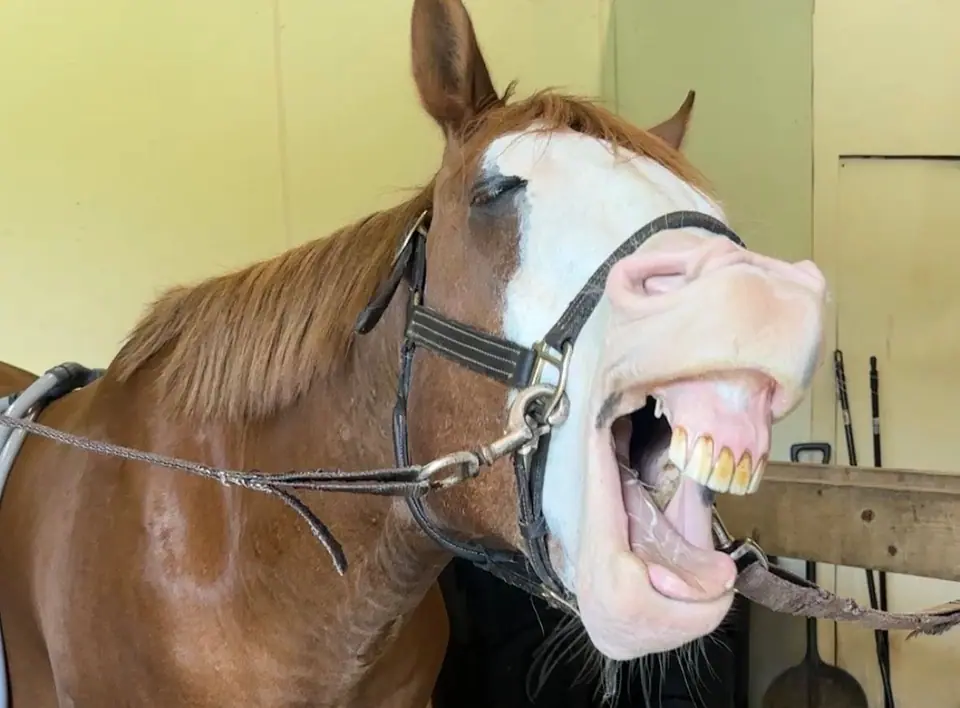
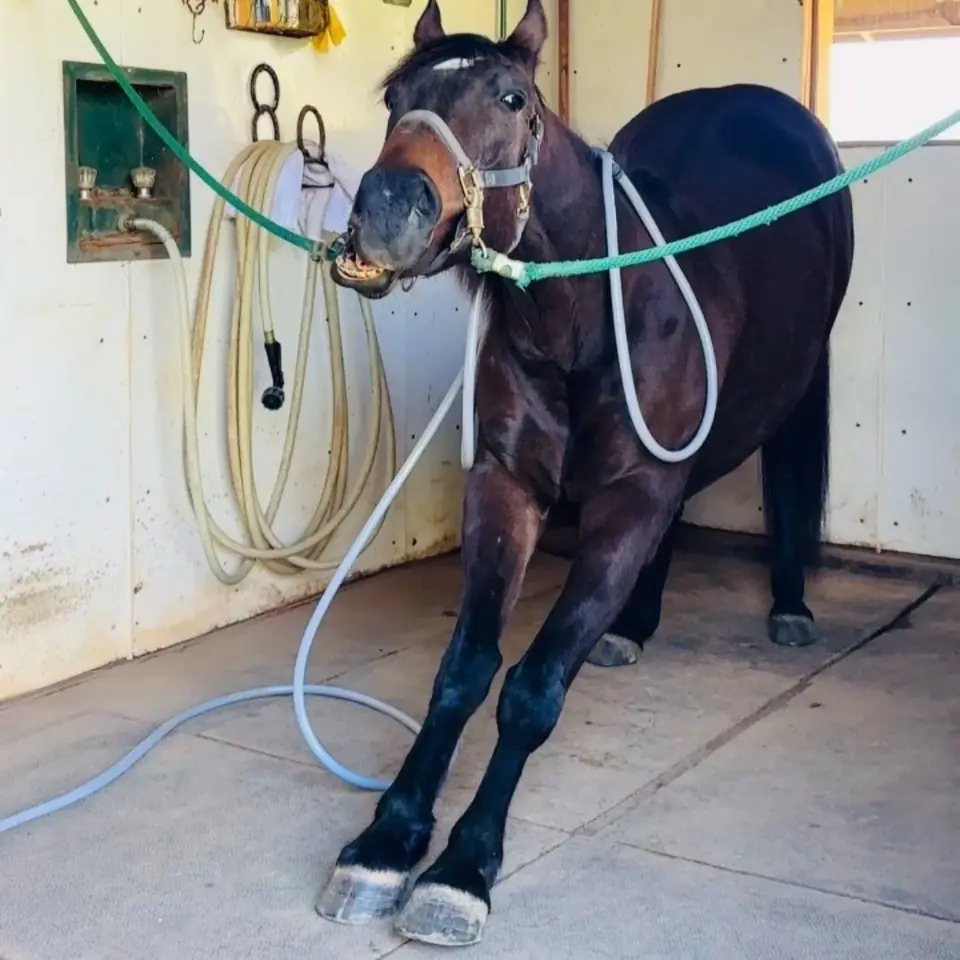
- Owners often notice their horse relaxing: licking, chewing, yawning, heavy eyes.
- It isn't for every horse. See the "when not to" list below.
- It works alongside your vet's care, never instead of it.
What Is PEMF for Horses?
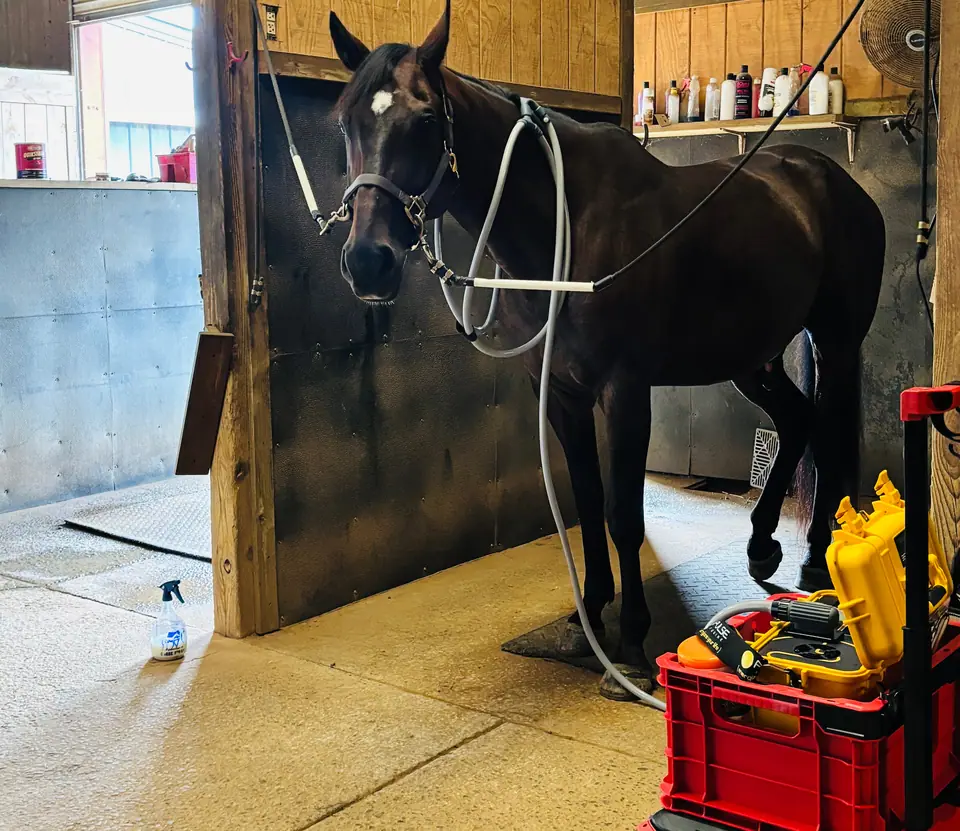
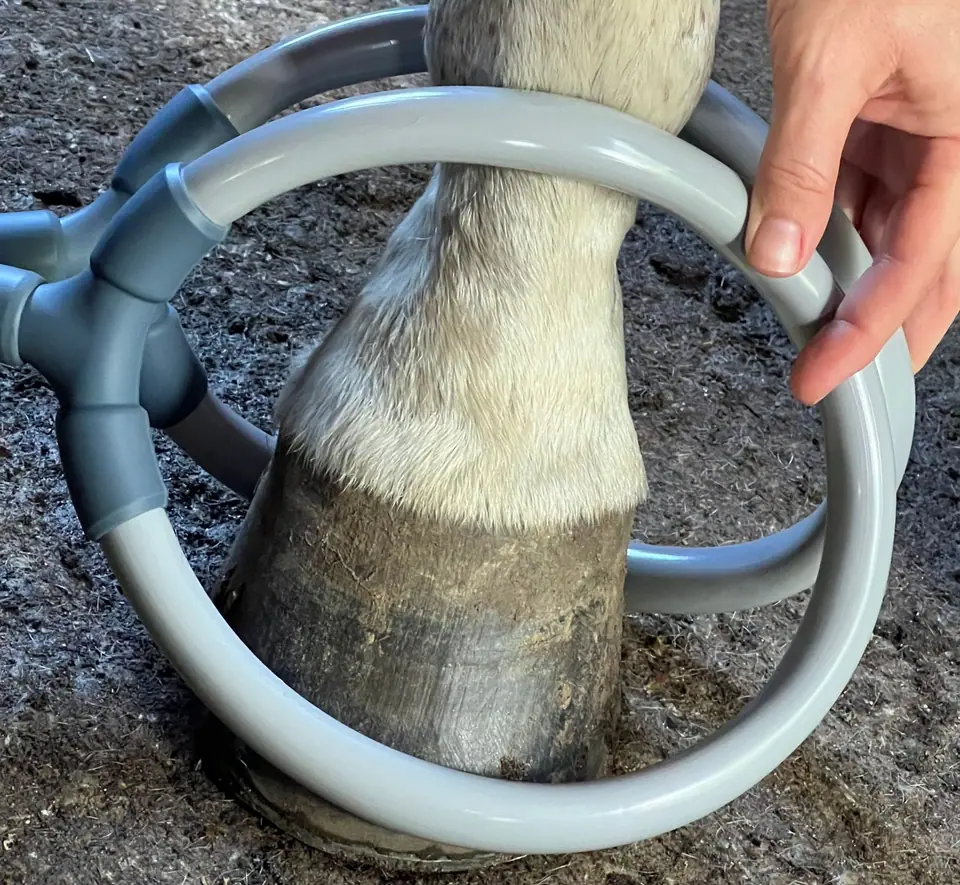
PEMF stands for pulsed electromagnetic field. The device sends a pulsing magnetic field through a flexible coil (the grey loop). I drape or hold the coil over the area I'm working on, or around a leg or hoof. The pulse passes through the coat and skin without anything going into your horse. No needles, no creams, nothing to clip.
The pulse is so gentle that many horses barely seem to notice it. When it's set correctly, you'll just see a light flutter in the muscle under the coil.
I often pair PEMF with massage in the same session. The massage works on muscle and fascia with my hands; PEMF is a quiet, hands-off way to help your horse settle and relax while I work. It also fits easily around a show schedule, in the days before a competition or for recovery afterwards.
What Happens in an Equine PEMF Session?
A whole-body session takes about 60 minutes and a targeted session 30 to 45 minutes. Here's how it goes:
We start with your horse.
I'll ask about history, recent work and anything new, just like a massage session.
I choose whole body or targeted.
A whole-body session moves the coil around the neck, shoulders, back and hindquarters. A targeted session focuses on one area, like a hock or a stifle.
I start low and watch.
Your horse sets the pace. I adjust the setting based on how they respond.
About 60 minutes later,
we're done (30 to 45 minutes for a targeted session).
Butterfly flutters, not convulsions. This is the thing I tell every client. The muscle under the coil should gently flutter like a butterfly's wings. That's it. If someone is doing PEMF on your horse and the muscles are twitching hard, bouncing or jerking, ask them to stop. More is not better. (I've tried it on myself turned up high. Ask me how I know.)
Watch Artie
Artie during a Pulse PEMF session. After a year and a half of hiding it, he finally gave me a big sideways-jaw yawn.
Watch the full reel on Instagram (opens in a new tab)What Do Owners Notice After PEMF?
Most often, a more relaxed horse. Every horse is different, and PEMF isn't a fix for anything on its own, but this is what owners often notice during and after a session:
- Licking, chewing and big yawns
- Heavy eyes and a lowered head
- A horse who's calmer and more settled in the cross-ties
- A horse who feels looser or moves more freely on the next ride
Some horses give big, obvious responses. Some just stand there quietly. Both are fine.
When Should a Horse Not Have PEMF?
Not if your horse has an implanted electronic device, is pregnant, is bleeding, has an injury your vet hasn't seen, shows signs of colic or seems unwell. Since PEMF works through the whole body, please tell me before the session if any of these apply:
Not sure? Message me before you book and we'll work it out together, with your vet if needed.
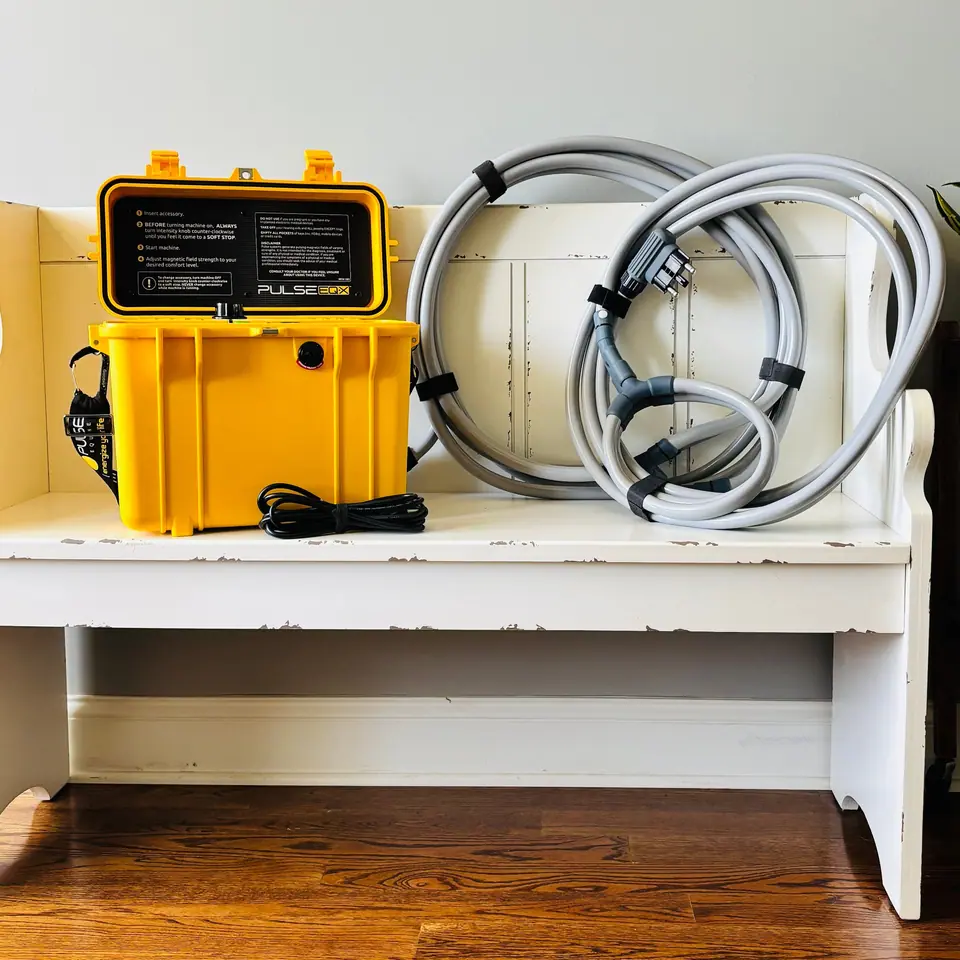
The device I use: Pulse EQ-X
I use a Pulse EQ-X PEMF device. Pulse is made right here in Northwest Georgia, which I love. It comes in a bright yellow case that has become part of my look, along with the red toolbox.
About the Pulse device (opens in a new tab)
Is There Research on PEMF for Horses?
A little, and it's early: PEMF is a young area of research in horses. One small pilot study looked at sole depth in 10 horses (6 had PEMF over 30 days, 4 did not). It saw a trend toward deeper soles in one area of the hoof in the PEMF group, but the result wasn't statistically significant. In other words: interesting, worth watching, not proof.
Read my full write-up of the sole depth study (Matz et al., 2024)
Safety first

Curious whether PEMF suits your horse?
PEMF can be booked on its own or with massage. Whole-body PEMF (60 minutes) is $85, targeted PEMF (30 to 45 minutes) is $65, and a combo session with massage is $150.
Free printable
The carrot-stretch cheat sheet
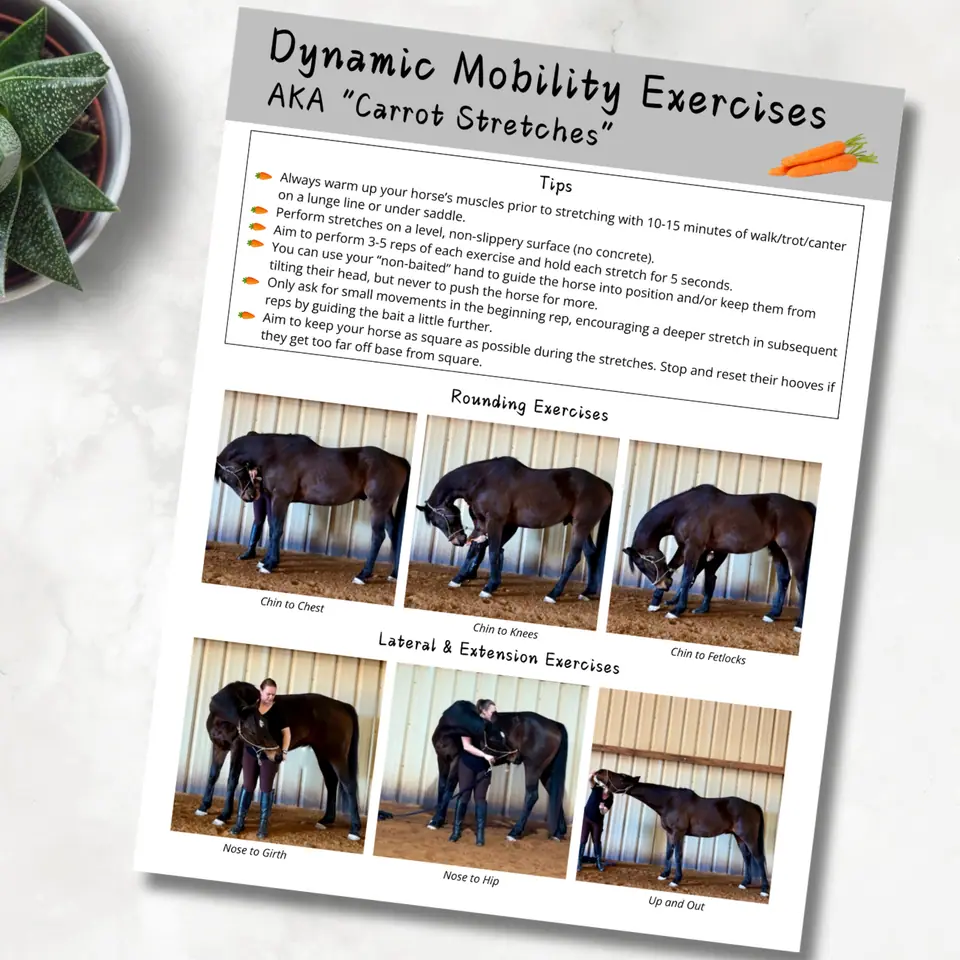
Stick it on the barn fridge, the tack room door or your phone. One page, six stretches, all the tips. Free download confirmed. Jen is redoing it with new images
- Six carrot stretches with photos: chin to chest, chin to knees, chin to fetlocks, nose to girth, nose to hip, and up and out
- How to warm up first (10 to 15 minutes of walk, trot and canter)
- Where to do them (level, non-slip footing, never concrete)
- How many and how long (3 to 5 reps, holding about 5 seconds)
- How to start small and build, and how to keep your horse square
- The signs of a good stretch, and when to stop