The hour I spend with your horse is only part of the picture. What happens in the next few hours, and in the weeks before I see you again, matters just as much. Here's what to expect and what I'd love you to do.
Quick version
- Yawning, licking and chewing, and a sleepy look are all normal during and after a session.
- Within two hours: hand walk or turn out for at least 10 minutes.
- Fresh water, always.
- Give a day off or light work only.
- Read your session report, then do the homework in it.
- Book your next session before you forget. Consistency is where the results come from.
What Does a Horse Do During a Massage?
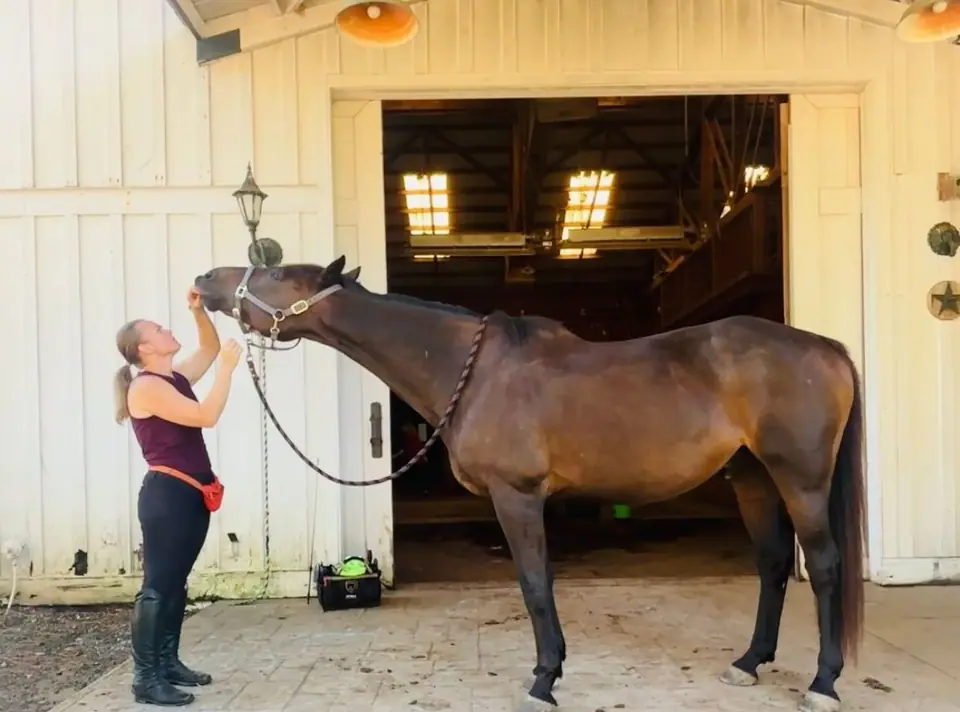
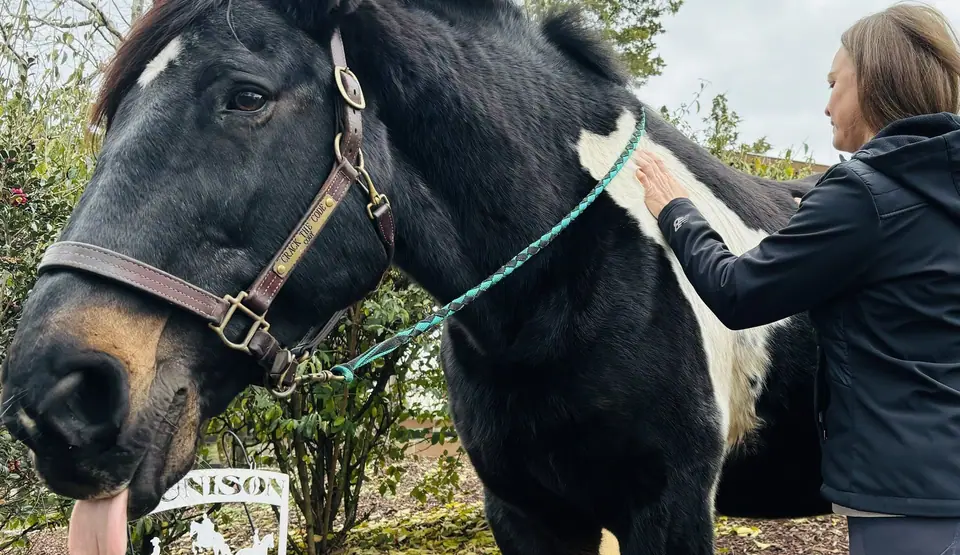
Most horses yawn, lick and chew, get sleepy or stretch, and some fidget for a moment. Every horse is different, and I want them to tell me how they feel. Some of the things you'll see:
- Yawning, licking and chewing. Often right after a spot lets go. Some horses yawn so big their jaw goes sideways.
- Getting sleepy. Heavy eyes, a lowered head, a cocked hind leg. Some horses nearly nod off in the cross-ties.
- Stretching. "Downward facing dog" is my favorite.
- Fidgeting, shifting or even a stomp. This isn't bad manners. It's information about where the hidden tension lives, and I adjust as we go.
And some horses don't give big responses at all. That's okay too. A quiet horse can still be getting a lot out of the session.
Watch Artie
A big sideways-jaw yawn from Artie. He made me wait a year and a half for it.
Watch the full reel on Instagram (opens in a new tab)Is It Normal for a Horse to Be Tired After a Massage?
Yes. Most horses are relaxed and a bit dozy after a session, and because bodywork can be a lot for a body to process, some seem a little tired that evening or the next day. That's why I ask for an easy day.
If you notice anything that worries you, like heat, swelling, lameness or your horse just not seeming himself, call your vet and let me know too.
Your aftercare checklist
Walk it out.
Within two hours of the session, hand walk or turn your horse out for at least 10 minutes. Gentle movement keeps the blood flowing and the muscles loose.
Water.
Make sure there's fresh water available. (If you've ever tried to have a good day while dehydrated, you get it.)
Easy does it.
A day off or light work is best. If you really want to ride the same day, ride soon after the session and keep it light.
[CONFIRM WITH JEN: her old prep FAQ says "if you plan to ride the day of a session, plan to do so immediately after"; is that still her advice alongside "time off or light work"?]
Do the homework.
It's in your session report (more on that below).
How to read your session report
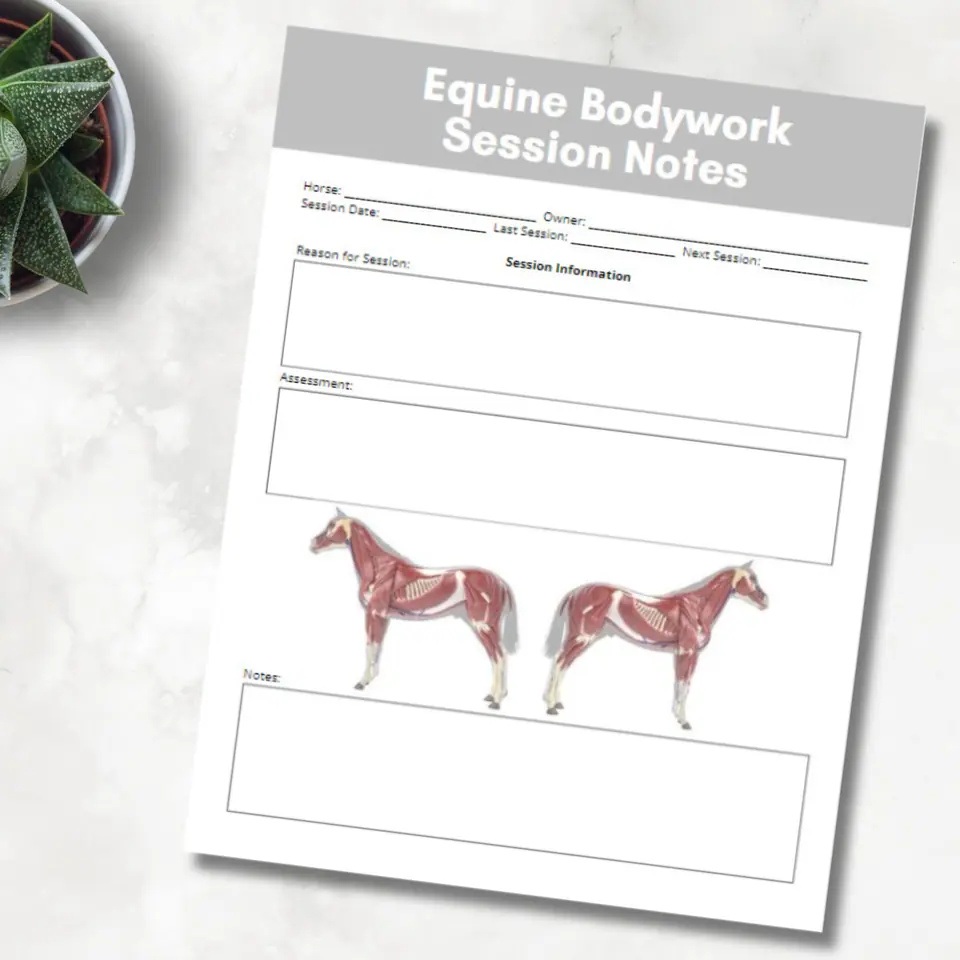
Every session ends with a detailed session report and individualized homework, emailed to you. It's my favorite part of what I do, because it means the session keeps working after I've driven away. Here's what you'll find in it: [CONFIRM WITH JEN: report sections and format]
- What you told me. Your goals and anything you've noticed since last time.
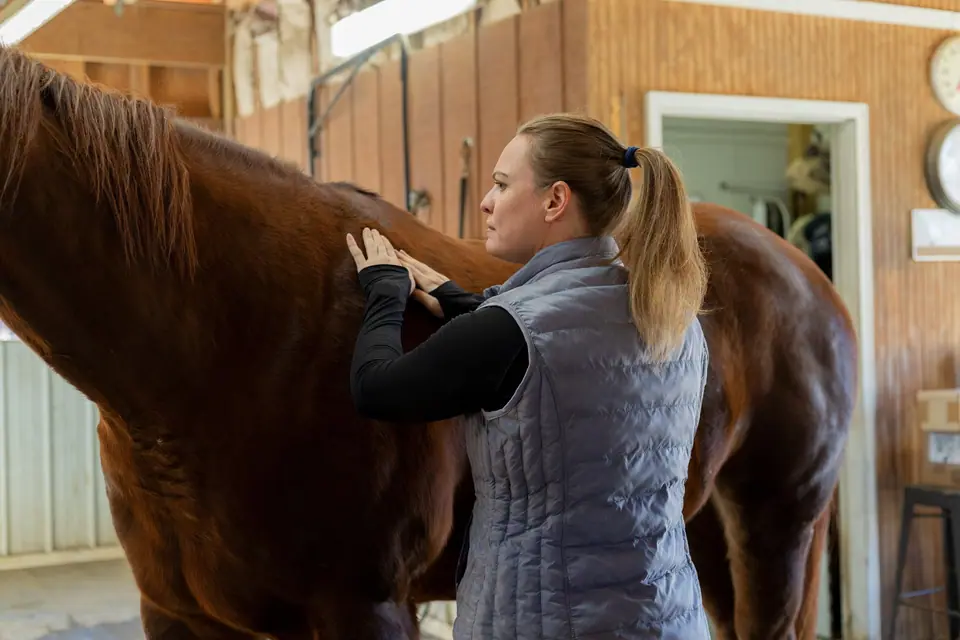
- What I found. Areas of tension, which side was tighter, and where your horse reacted. I mark these on a horse diagram so you can see them, and I often add photos.
- What I did and how your horse responded. Which spots released easily and which ones your horse wanted me to go slowly on.
- Your homework. Usually two or three simple exercises, with how often to do them and how long to hold.
- What to watch for. Little clues to notice between visits.
- When I'd suggest seeing your horse again.
"She's also very thorough, and sends detailed notes about your horse after each session!"
How to use the homework
I'm only one person and I can't be there every day, but you can. The homework is how you keep the good stuff going.
- Keep it short and regular. A few minutes, a few times a week, beats one big session on a Sunday.
- Pick the right moment. Stretches go after a ride or after a proper warm-up, never on cold muscles. I save carrot stretches for after the ride and rotate through three or four of them, holding each for about 5 to 6 seconds.
- Small is fine. You don't need a big movement to get something useful. A small lift or a small stretch done well is better than a big one forced.
- Listen. Stretching should never be a wrestling match. If your horse snatches a leg back, holds their breath or turns away, ease off.
- Don't be surprised if your homework is "stand there." One of the exercises I give most often is helping your horse find a relaxed, neutral posture in your presence. It sounds simple. It's not always easy.
- Tell me how it went. Send me a quick message or a video. It helps me plan the next visit.
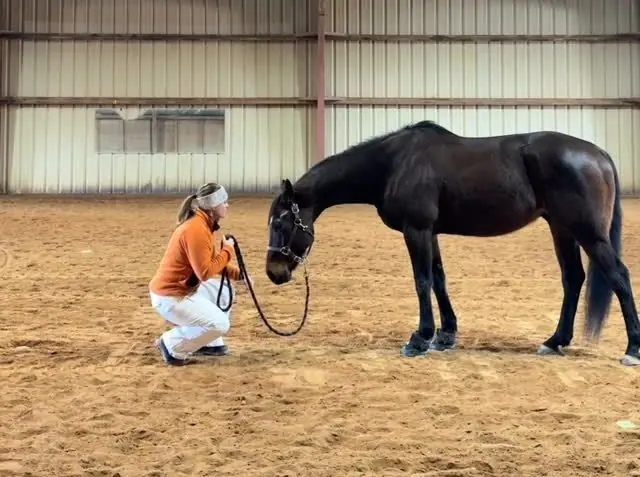
See the stretches Belly lifts, step by step
How Often Should a Horse Get a Massage?
It depends on your horse's workload, age and goals, so I'll suggest a timing in your session report and we'll adjust it as we go. What matters most is a regular rhythm.
Would you expect your farrier to show up once a year and sort out every hoof problem in one hour? Bodywork works the same way. One session can feel lovely, but the real change comes from consistency, because tension builds back up with training, competition and everyday life.
Consistency leads to impact and impact leads to results. If you're competing, tell me your show dates and we'll plan your sessions around them. [CONFIRM WITH JEN: is there a typical interval she recommends? Do not publish a number until she confirms.]
Safety first
Bodywork supports your horse's wellbeing alongside veterinary care. It is not a substitute for it. If your horse is lame, unwell or recovering from injury, please check with your vet first.

Ready for your horse's next session?
Book now and I'll send your report within [CONFIRM WITH JEN: turnaround, e.g. a day or two] of the session.
Free printable
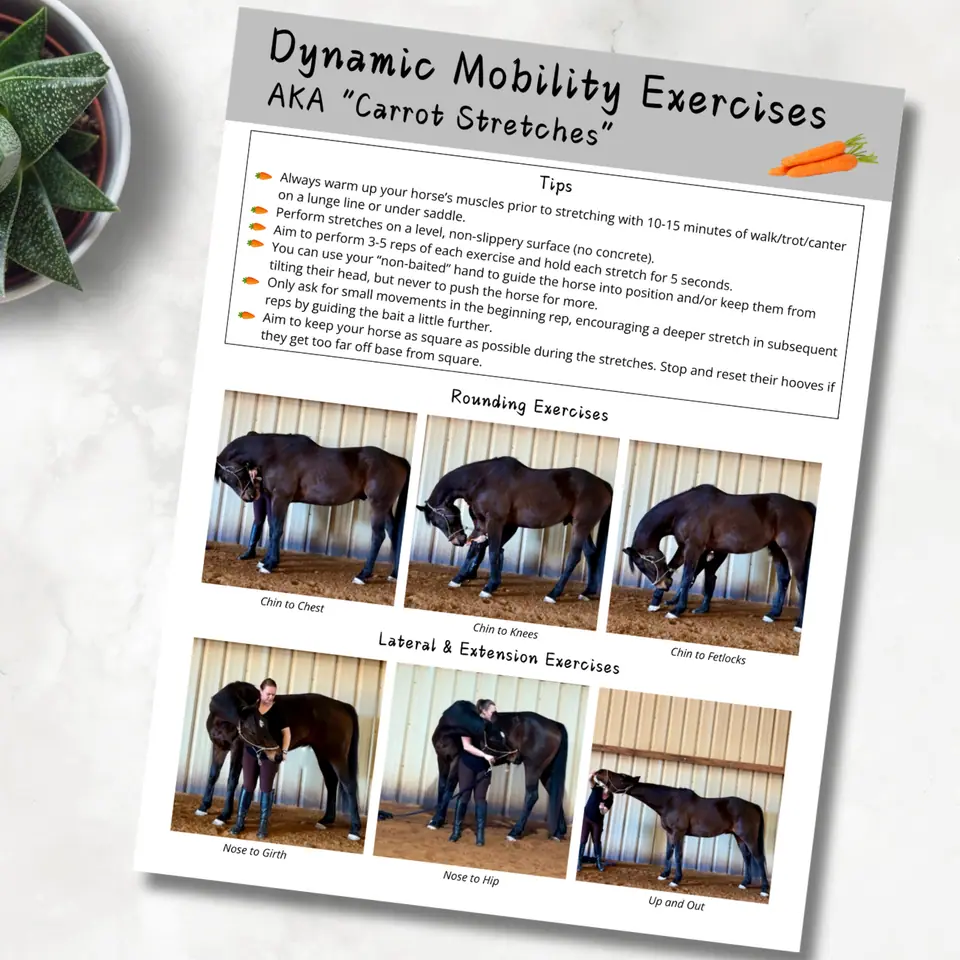
The carrot-stretch cheat sheet
Stick it on the barn fridge, the tack room door or your phone. One page, six stretches, all the tips. Free download confirmed. Jen is redoing it with new images
- Six carrot stretches with photos: chin to chest, chin to knees, chin to fetlocks, nose to girth, nose to hip, and up and out
- How to warm up first (10 to 15 minutes of walk, trot and canter)
- Where to do them (level, non-slip footing, never concrete)
- How many and how long (3 to 5 reps, holding about 5 seconds)
- How to start small and build, and how to keep your horse square
- The signs of a good stretch, and when to stop