Quick version
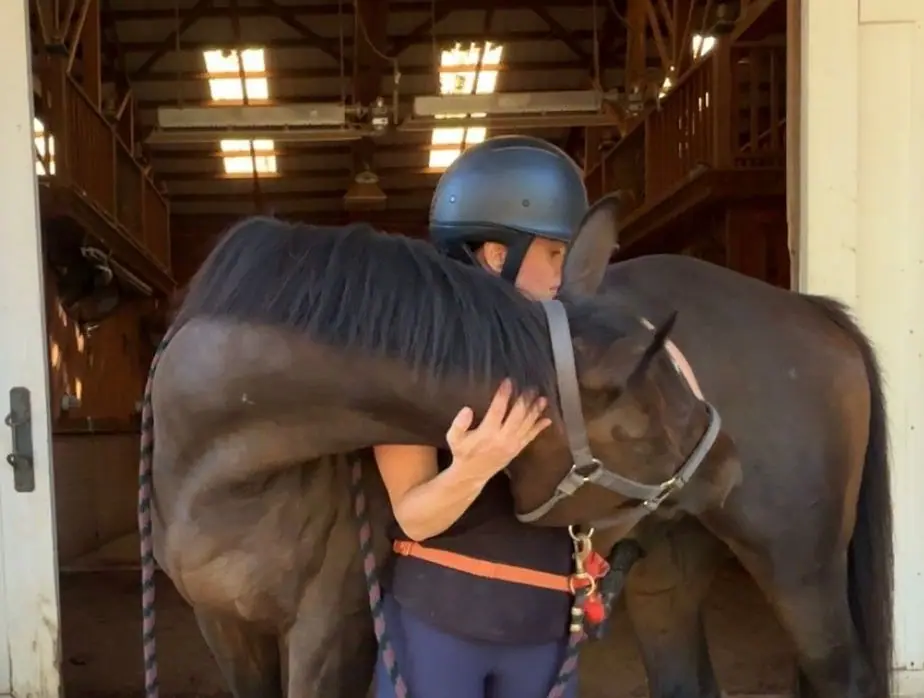
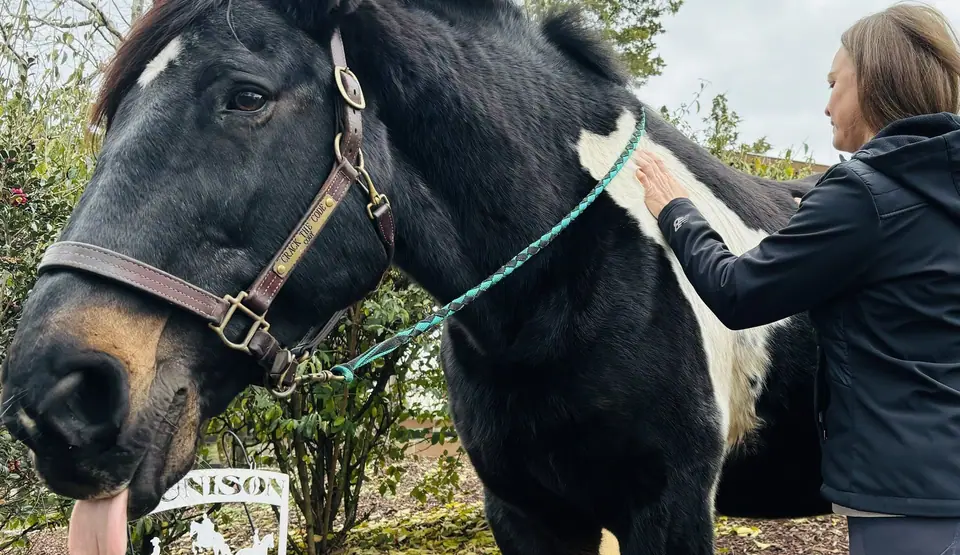
- "Zipper" your hands together along the midline of the belly, scratching gently with your fingertips.
- Look for a slight lift at the withers and a slight drop of the head. It doesn't have to be big.
- Aim to hold the lift for 5 to 6 seconds. If your horse can't yet, build up to it. Don't go longer.
- Let your horse fully relax back into their normal posture between lifts.
- No pushing up with your palms, no fingernails, no hoof picks.
What Is the Thoracic Sling in Horses?
The thoracic sling is the group of muscles, including the core, that holds up your horse's front end. If they're weak, your horse is essentially moving with their front end collapsing.
A strong thoracic sling matters for balance, self-carriage and performance, whether you're riding a dressage test or a jump-off. A weak one leads to compensation, and over time, compensation is where a lot of problems start.
What Are the Signs of a Weak Core in Horses?
The five I see most: heavy on the forehand, poor topline muscle, choppy or stiff movement, trouble bending, and a sagging underline.
Heavy on the forehand
Constantly leaning on your hands.
Poor topline muscle
Choppy, stiff movement
They don't swing through their back.
Trouble bending and tracking
Often bracing through the ribcage.
A sagging underline
Even if they aren't overweight.
Other things I often see alongside these: a lack of push from the hind end, trouble with downward transitions, and a horse who carries their head high.
From my Instagram
Five red flags your horse might have weak core muscles.
Watch the full reel on Instagram (opens in a new tab)Why I do belly lifts in every session
Yes, asking your horse to switch on their core can help them use those muscles under saddle. It's like a personal trainer having you brace your abs before a squat.
But I mostly use belly lifts as an assessment. I want to know whether your horse actually can engage these muscles while standing still. If they can't, I can be pretty sure they aren't using them well when ridden, and that there's some compensation going on underneath.
How Do You Do a Belly Lift on a Horse?
Stand at your horse's side by the girth, zipper your fingertips along the midline, look for a small lift at the withers, hold for 5 to 6 seconds, then let your horse relax. Step by step:
Position yourself.
Stand at your horse's side, level with the girth area, facing their belly. Make sure they're standing square and relaxed.
Zipper your hands.
Start with one hand on each side under the ribcage and slide them toward each other until they meet in the middle, gently scratching with your fingertips as you go. If that doesn't get a response, try this version: start with one hand between the front legs and one just behind the ribcage, and zipper them toward each other along the midline.
Look for the lift.
You're watching for a slight lift at the withers and a slight drop of the head to counterbalance. You don't need much movement. Just a filling in of the trapezius muscle right at the withers counts as success.
Hold.
Aim for 5 to 6 seconds. If your horse can't hold that long at first, that's fine. Work up to it over time.
Relax.
Let your horse sink fully back into their natural posture before you ask again.
[CONFIRM WITH JEN: how many lifts per session, and how many days a week, does she usually give owners? Her posts say "part of your horse's weekly routine" but give no rep count.]
Watch it done
Belly lifts, how to: watch the withers lift and the head drop a little to counterbalance.
Watch the full reel on Instagram (opens in a new tab)4 quick tweaks for better belly lifts
No palm forcing.
A gentle reflex works far better than brute force. Pushing up with your hands is cheating!
Watch the nails.
No harsh scratching, and go easy if you use a hoof pick. This is a sensitive area.
Check your alignment.
Stay right on the midline for a straight, even lift.
Keep holds short.
A few seconds is plenty. Don't wear out their core.
What Are the Benefits of Belly Lifts for Horses?
Belly lifts may help your horse keep good posture and mobility as they age, and may help with hind end engagement when you ride and compete. Those are my top two reasons for making them part of your routine.
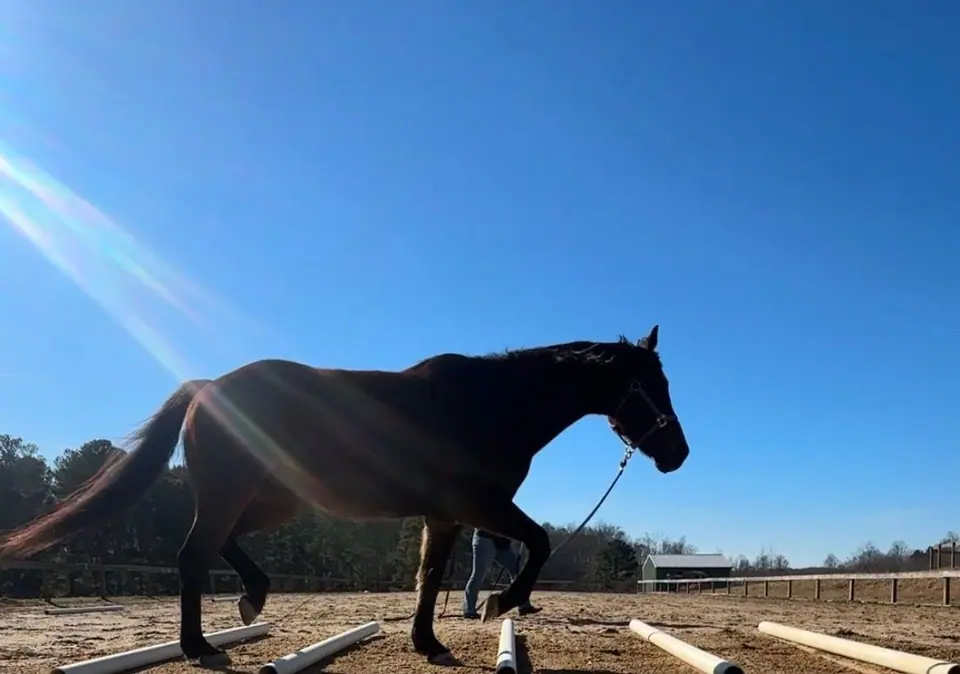
Belly lifts are one piece of the puzzle. I also like carrot stretches (see simple stretches), raised ground poles (see in-hand polework), and a few minutes on balance pads for some horses. Your session report will say which ones suit your horse.
Artie's story: a bodyworker's horse with a weak core
When I bought Artie, my bay Oldenburg, in November 2024, I spent the winter assessing him before making a plan.
Step 1 was posture and conformation. Luckily, Artie has good conformation. Nearly all of his posture issues pointed to one thing: he needed to learn to engage his thoracic sling properly.
Step 2 was mobility and balance. No surprises there either. He was tight through the shoulders, struggled to switch on his core, and when I lifted a leg and gently pushed on his hind end, he lost his balance completely.

That's why belly lifts, carrot stretches and polework are part of his routine. He's a constant work in progress (and my ❤️ horse). Some days I'm still asking him to engage his core and stop stabbing his hooves into the ground. Baby steps!

Want me to take a look?
If your horse just won't lift, it doesn't mean you're doing it wrong. It may be telling us there's more going on. I can check your technique, look at how your horse is using their body, and leave you with a homework plan in your session report.
Bodywork supports your horse's wellbeing alongside veterinary care. It is not a substitute for it. If your horse is lame, unwell or recovering from injury, please check with your vet first.
Free printable
The Belly Lift Cheat Sheet
A free one-page PDF to keep in the tack room, with a small weekly log so you can see your horse's progress.
- A simple diagram of the zipper hand path (side to side, and front legs to ribcage)
- What a good lift looks like: withers lift, head drops
- The 5 to 6 second hold
- The 4 quick tweaks
- The 5 signs of a weak thoracic sling as a tick list
- The safety lines, and a weekly log: lift, hold time, notes