Quick version
- Watch four areas: performance, under saddle, on the ground, and the body itself.
- Many "behaviour problems" are a horse communicating, not being difficult.
- Easy checks: drag marks in the arena sand, how your horse stands for the farrier, their jaw, their back before and after rides.
- Your vet comes first. If anything is new, sudden or getting worse, call them before you book bodywork.
In performance
If you ride and compete often, this is usually where you'll notice it first.
- Refusing jumps
- Resisting collection, or refusing to bend
- Feeling stiff on one or both sides
- Struggling with lead changes, or often picking up the wrong canter lead
- Breaking gait in the canter
- Tripping, or dragging the toes
- Short, choppy strides
- Twisting or an "untidy" hind end over jumps
Under saddle and on the lunge
- Rearing or bucking
- Tossing the head, carrying it high, or tilting it
- Hollowing the back
- Taking off at the mounting block
- Bucking or falling in on the lunge
On the ground
- Pinning ears, swishing the tail, biting, pawing or stomping while being groomed or tacked up
- Flinching or stepping away while you groom
- Constant fidgeting in the cross-ties
- Struggling to stand for the farrier
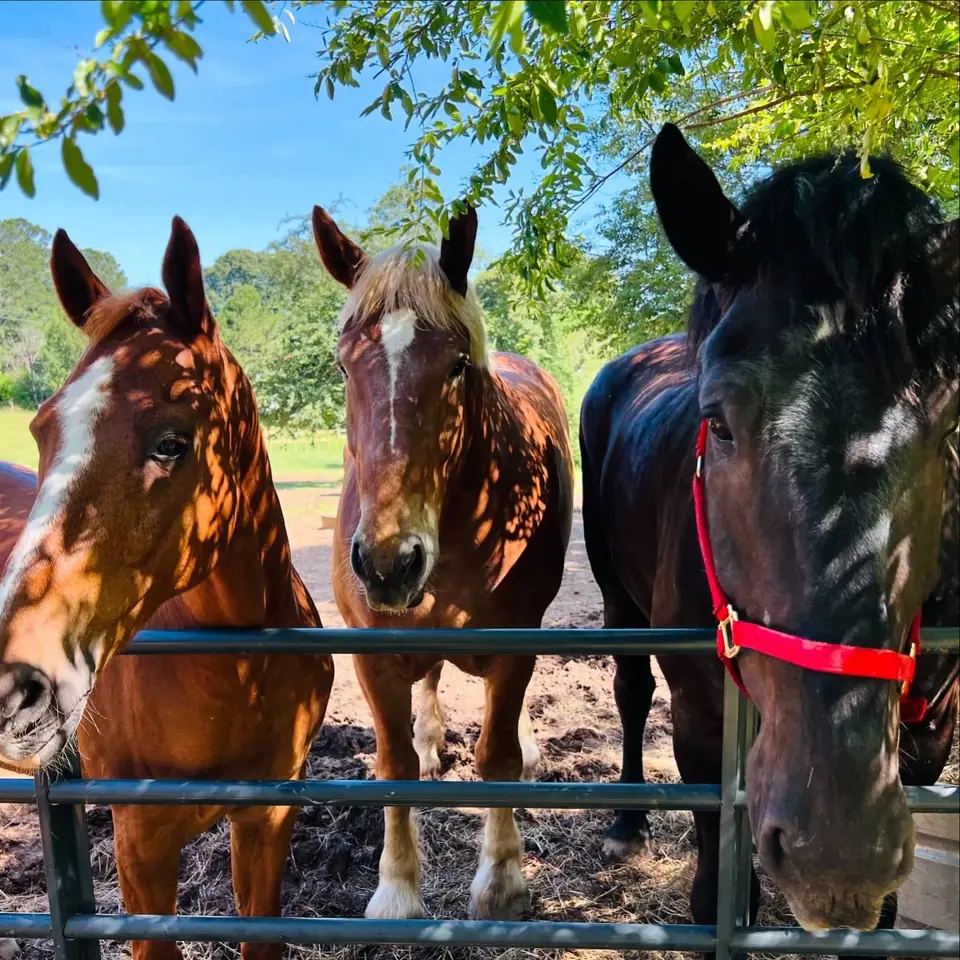
In the body itself
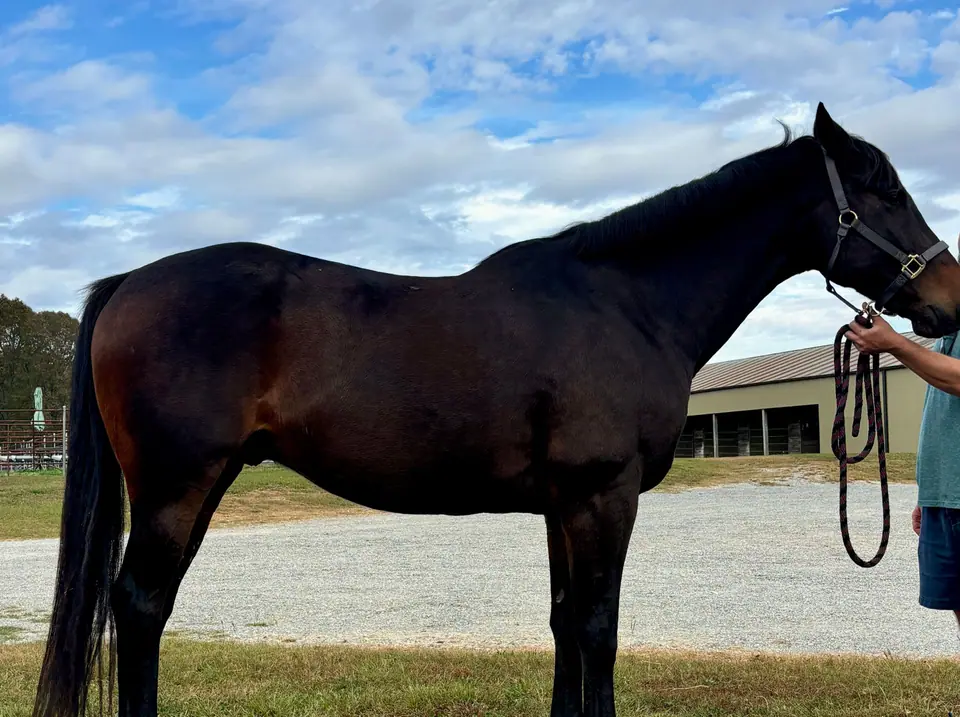
- Unusual posture, or a horse who can't stand quietly in a soft, balanced position after work
- Muscle loss, or uneven muscle development
- Trouble holding muscle tone
- One side looking different from the other
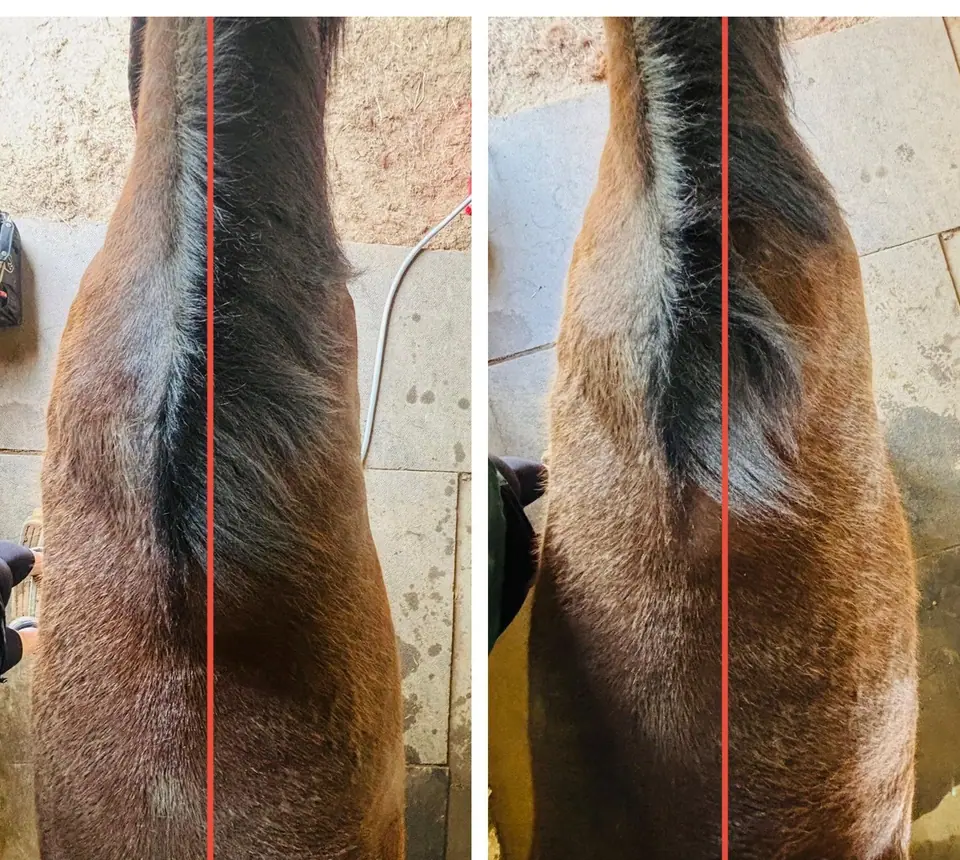
A closer look at 6 common areas
1. Why Is My Horse Dragging His Toes?
Toe dragging is often an early sign of tightness, weakness or restriction in the back, especially if it's one-sided. A trail of dust behind your horse, or drag marks in the sand, often gets brushed off as "laziness." Try this: check the arena sand after you ride. If you see drag marks consistently, it's worth investigating before it turns into soreness or compensation.
2. Why Won't My Horse Stand for the Farrier?
It often gets labelled a behaviour problem, but in many cases it's a body problem. Standing quietly on three legs takes strength, balance and a thoracic sling that can do its job. If your horse can't stabilise comfortably, they shift, lean, fidget and try to put the foot down. Not because they're being difficult, but because they're communicating. (See belly lifts and the thoracic sling.)
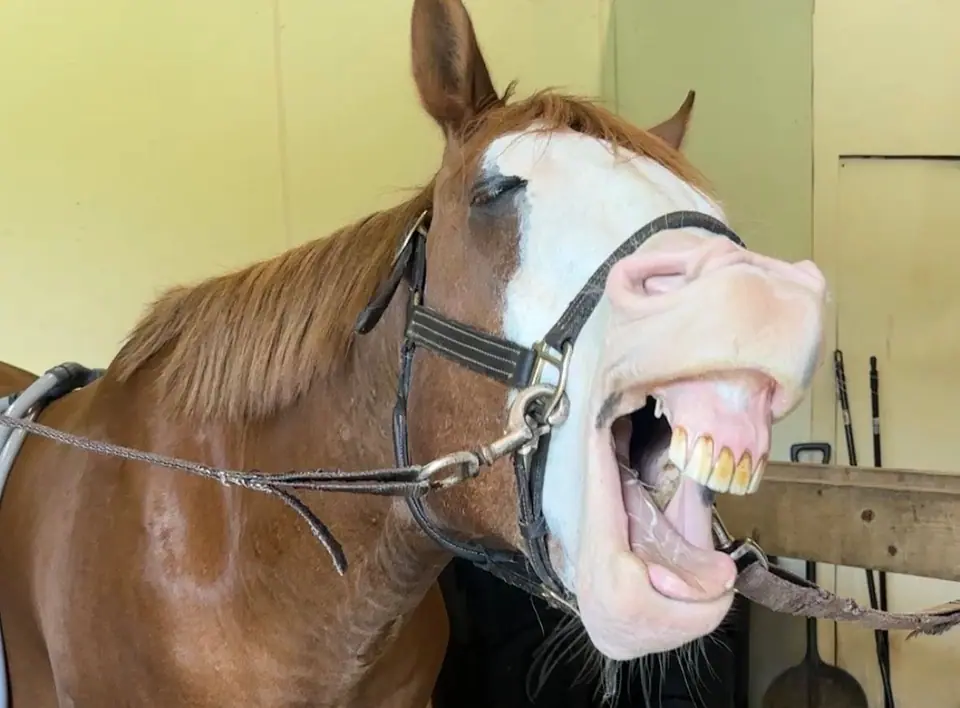
3. The jaw and TMJ
The jaw is a major tension holder and is often overlooked, especially in horses who are mouthy or resistant in the bridle. Signs worth a closer look include head tossing or shaking, resisting the bit or bridle, dropping feed while chewing, swelling or heat near the base of the ear, and stiffness under saddle.
Try this: lightly trace your fingertips along the jawline, the big chewing muscle (masseter) and the TMJ just in front of the ear. Watch for flinching or eye closing, and feel for heat or tightness. Dropping feed, swelling or heat are a call to your vet or equine dentist first.
4. The hyoid area
The hyoid is a delicate set of bones under the jaw that connects the tongue, larynx and pharynx. It can hold tension from constant chewing and swallowing and from bit placement, and that tension can show up elsewhere, even as a shorter stride.
5. The back
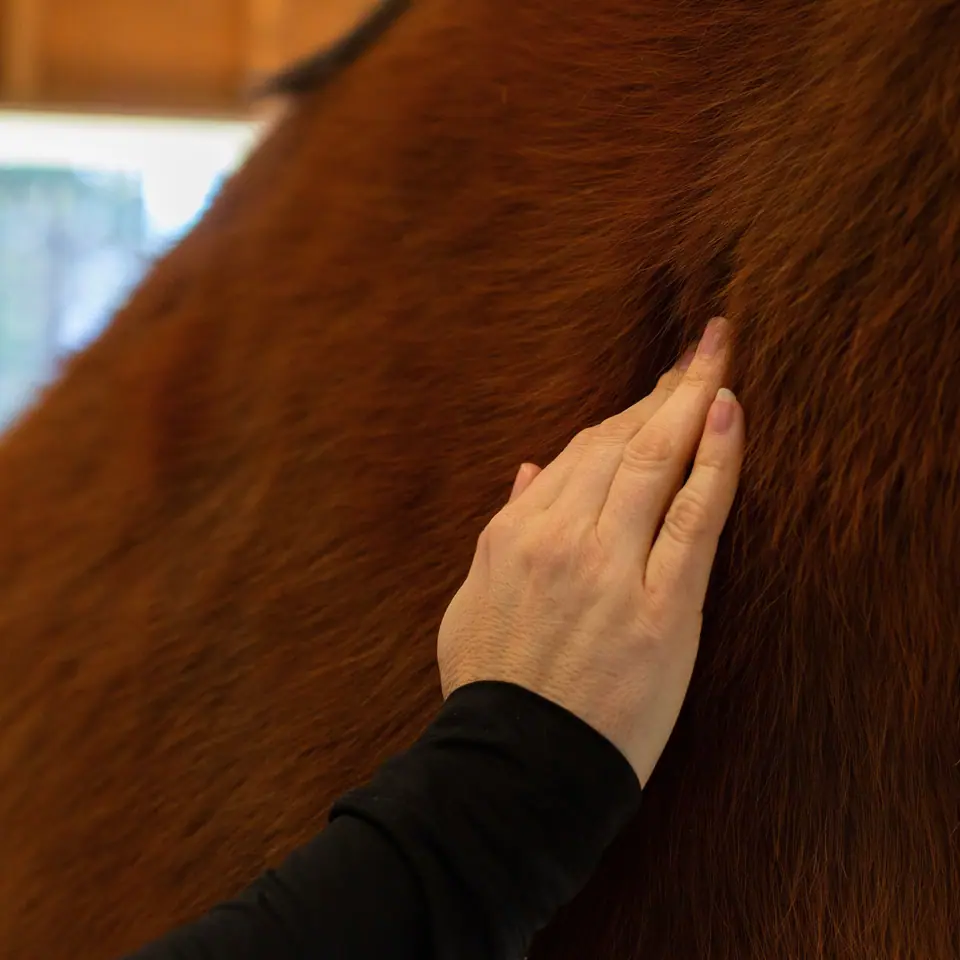
Palpate your horse's back before and after you ride. Run your hand along the muscles either side of the spine and watch for pinned ears, "dancing" in the cross-ties, hollowing away from your hand, or a lot of heat or tenderness. Some horses show a rippling along the long back muscles. These can point to things like saddle fit or muscle tightness that should be looked at by a professional.
6. The tail
The dock of the tail is a place horses hold tension. It makes sense when you think how they clamp their tails down when worried or cross. In sessions I use tail lifts and tail circles to look for uneven muscle, balance issues, hind end tension and stiffness to one side. And some horses don't give big reactions, which is okay too: Artie works through it slowly with every lick, chew and head shake.
Watch Artie
A tail lift with Artie: he drops his left hip, then licks, chews and shakes his head.
Watch the full reel on Instagram (opens in a new tab)Printable checklist
Tick what you've noticed, then print it and bring it to your next session.
Is my horse telling me something?
0 of 21 ticked
Date and notes: bring it to your next visit.

Want me to take a look?
If a few of these boxes are ticked (and your vet has ruled out medical causes), I'd love to help. Every session starts with your horse's history and a movement assessment, and ends with a detailed session report and individualized homework you can do between sessions.
Bodywork supports your horse's wellbeing alongside veterinary care. It is not a substitute for it. If your horse is lame, unwell or recovering from injury, please check with your vet first.
Free printable
"Is My Horse Telling Me Something?"
The checklist as a free one-page PDF, with a date and notes line so you can bring it to your visit.
- The tick-list in four columns
- The 3 quick home checks: sand drag marks, jaw trace, back palpation
- The "call your vet first" list
- A date and notes line
- The vet disclaimer